How Treating Hearing Loss Could Help Lower Dementia Risk
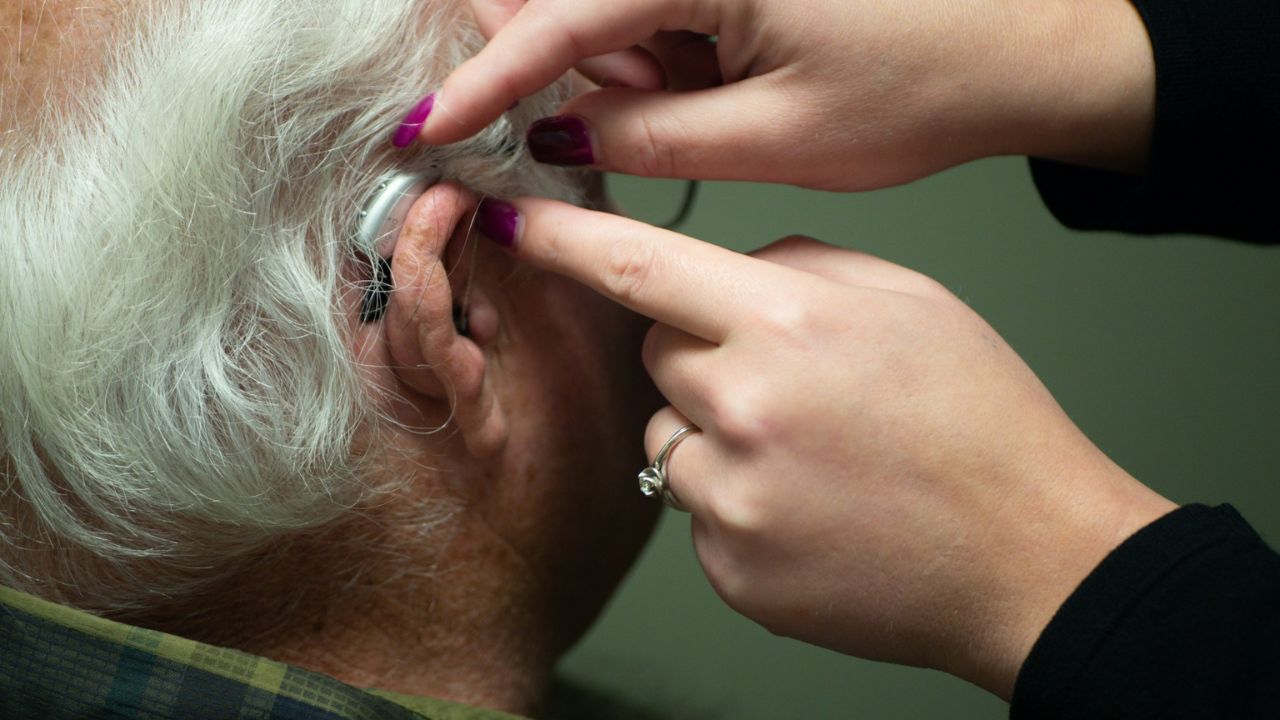
Speech-language pathologist Kimberly Mueller explains how age-related hearing loss can raise dementia risk — and discusses the trial she is leading on whether over-the-counter hearing aids could help protect cognition and quality of life.
Can improving hearing help preserve memory and thinking as we age? Hearing loss isn’t just an inconvenience of aging — it’s now considered one of the top modifiable risk factors for dementia.
Kimberly Mueller, Ph.D., is leading a clinical trial testing whether over-the-counter hearing aids can benefit people who have mild cognitive impairment and are found to have age-related hearing loss. An associate professor at the University of Wisconsin–Madison and a researcher with the Wisconsin Alzheimer’s Disease Research Center, Mueller’s work focuses on how speech and language change in preclinical Alzheimer’s, mild cognitive impairment, and dementia.
In this conversation with Being Patient’s Mark Niu, Mueller explains why hearing loss is both common and treatable — affecting about one in three adults over 65 — and why it is now considered one of the top modifiable risk factors for dementia. She breaks down how untreated hearing loss can strain the brain, contribute to social isolation and potentially accelerate cognitive decline, and she discusses how new hearing technologies and over-the-counter devices might expand access to care.
Mueller also shares early insights from her hearing aid trial, communication strategies for families, and emerging research using everyday speech patterns as a tool to detect brain changes earlier than standard memory testing.
Being Patient: First of all, give us an idea of how extensive hearing loss is among seniors today.
Kimberly Mueller: I want to make the distinction: age-related hearing loss is something that happens to older adults, and it happens to most older adults. One in three seniors over the age of 65 is going to have some kind of hearing loss. As they get older, the numbers increase. Right now, there’s about 72 million people in the U.S. who are living with some kind of hearing loss. So it’s a very prevalent part of aging. It’s actually part of typical aging — that’s how we view it, but it’s a treatable part of aging, and there’s a lot of reasons to look into treatment for hearing loss.
Being Patient: And what do we know right now about the relationship between hearing loss and changes in memory and thinking?
Mueller: A lot of studies have been done looking at longitudinal risk of developing dementia in people who have hearing loss versus people who don’t. People who have untreated hearing loss have a much larger risk of getting dementia relative to the general population. Hearing loss is considered to be one of the top modifiable risk factors for dementia, meaning that it’s something that you can do something about to potentially lower your risk of dementia.
So we know that there’s this relationship that exists between hearing loss and increased risk of dementia. The reasons why that exists are not fully understood, but one potentially very strong factor is that if you are having hearing loss, you’re in an environment where it’s noisy, or you’re out to dinner at a restaurant and you’re working really hard to hear the person who’s in front of you as well as tune out what’s behind you. That kind of effort into listening can detract from all your other memory and thinking skills that you need to use on a day-to-day basis. We think that there’s that interference that’s happening. That’s one potential reason.
But then also you can imagine that that becomes very frustrating as hearing loss worsens, and so many people tend to withdraw from those kinds of environments. We see this kind of reduction in social contact and an increase in isolation, and those are factors that are related to dementia. So I think it’s a multifactorial, bidirectional process that we don’t fully understand, but there are some key aspects that we think are really playing a role.
“One in three seniors over the age of 65 is going to have some kind of hearing loss. As they get older, the numbers increase.”
Being Patient: You actually conducted a clinical trial on this. Tell us how that works. And how long has it been going on? And who did you get to participate in this?
Mueller: The subject of the clinical trial is really important, and it actually relates to the entire issue of getting your hearing treated. Hearing aids are one potential treatment for hearing loss. Not everyone is eligible, but many people — older adults who have age-related hearing loss —are eligible for hearing aids, and this can dramatically improve quality of life.
There have also been studies to show that hearing aid users do have a lower risk of dementia compared to people with hearing loss and no hearing aids. So we know that there’s that factor.
We also know that in our society there’s an access problem. Not everyone who has a hearing loss has access to go to the doctor and get an audiology referral and then go to an audiologist, get a hearing test, pay for hearing aids. It’s a lot of steps to get the appropriate hearing care.
And so the FDA, a couple of years ago, approved over-the-counter hearing aids, and these are hearing aids that you don’t need a prescription for. You can order them online. You can get them at big-box stores. You can think of it like going to Walgreens or to the pharmacy to get readers, like reading glasses. You don’t need a prescription. You try them on, you kind of have an idea, and it makes your reading better, and you don’t have to go through all of the medical care. Same thing with these over-the-counter hearing aids. They’re appropriate for a certain type of hearing loss, mild-to-moderate hearing loss and so forth.
But these over-the-counter hearing aids have not been tested in people with mild cognitive impairment or the precursor to dementia, and so that is our clinical trial — to see if people go to the doctor for memory concerns, they get a diagnosis of mild cognitive impairment or early stage dementia, and they also find out that they might have a hearing loss, and they have to then go to another doctor and get an audiology appointment and so forth. Our idea is, can we intervene at that point with over-the-counter hearing aids, so that person is dealing with one diagnosis, mild cognitive impairment, and getting treatment at the same time with kind of a simple solution, these over-the-counter hearing aids.
Our trial is still going on. It’s a collaboration with Dr. Pam Souza at Northwestern University and here at UW–Madison. We have been recruiting people in that situation, people who go to the doctor and are there to get a potential diagnosis of dementia or mild cognitive impairment, and we’re there recruiting them to see if they want to sign up for this over-the-counter hearing aid clinical trial. We’re kind of nearing the end. We’re still looking for about 10 or 15 more people to be in the trial.
Being Patient: How many people have been in it so far?
Mueller: We’re up to somewhere between 25 and 30. I don’t have the exact number on me, but our goal was to have 40 people for this trial.
One of the really encouraging findings is that the interest was really overwhelming. So many of the patients who were coming for that other reason were interested in enrolling in the trial. They might not have met eligibility. We had kind of strict eligibility criteria, but the interest was really strong. Of the people that have enrolled, the compliance and the use of these over-the-counter hearing aids has also been extremely strong.
What we’re measuring is, number one, do people with mild cognitive impairment – are they able to benefit from these over-the-counter hearing aids? And number two, we’re looking at an actual objective conversation measure. So we have them come in, they sit behind a barrier, and their care partner or spouse or friend is on the other side of this barrier, and they have a task; they have to communicate with each other. We’re looking to see how well they’re doing that after having worn these over-the-counter hearing aids. It’s kind of got a dual outcome. First, quality of life improvement in everyday hearing and then actual relationship improvement and conversation.
Being Patient: Many people think of hearing loss as just a sensory issue, but how do you think hearing loss also becomes sort of a cognitive and social-emotional issue for people and their families?
Mueller: It can put a strain on relationships in general. If your partner is having trouble hearing, that can be very frustrating for you, and then it can be frustrating for the person with hearing loss.
There’s [also] this cognitive load, where you’re putting a lot of your thinking resources toward hearing what’s being said and making sense of what’s being said, so that it’s hard to remember things. Sometimes hearing loss can be masked as cognitive decline, and when someone actually gets these hearing aids, then you can see an improvement in some cases.
There’s also this theory that maybe with some of these diseases, like Alzheimer’s disease, vascular disease, maybe there’s shared pathology, meaning that maybe some of the neurodegeneration that happens as a result of those diseases is also happening in the auditory cortex part of the brain, and so that could be a potential role.
But then also, we know, based on neuroplasticity principles, that if you’re not using some part of your brain for a period of time, you’re losing it. So use it or lose it. And if it’s becoming more and more difficult to hear things and you’re losing that sensory input that you once had, there may be some brain shrinkage in that region, and that can also cause cognitive decline.
I think there’s a lot of factors at play. The other thing you mentioned is social relationships; loneliness and isolation are such a part of hearing loss, and then a risk for dementia. If we can improve hearing and then have a downstream effect on social relationships, taking part in different activities, then that’s going to have better outcomes for people.
“Sometimes hearing loss can be masked as cognitive decline, and when someone actually gets these hearing aids, then you can see an improvement in some cases.”
Being Patient: What are some early signs, either in hearing or communication, that might sort of signal that it’s time to get a hearing evaluation?
Mueller: Probably one of the number one signs is that your partner might tell you, “I think you’re not hearing me,” or you might feel like others are mumbling a lot of the time. And in fact, maybe they’re not, and maybe that’s hearing loss.
You might see that the TV needs to be louder and louder in order for you to hear it, or that you’re in a restaurant and you’re just having more and more trouble hearing the person next to you.
There’s also no reason, once you hit the age of 50, 60, you can’t get an audiological evaluation. If you have access, getting a hearing test kind of on the younger side can give you this nice baseline, so that when you do potentially start noticing things, you can compare it to this baseline.
If you don’t have access, then I would say looking into different resources, such as over-the-counter hearing aids. Aging and disability resource centers may be able to help you find affordable hearing aids. There are lots of options that may increase accessibility.
Being Patient: Your lab uses naturalistic digital speech recordings, natural language processing and machine learning to identify sort of linguistic and acoustic markers of cognitive decline. Put that into simple English as to what you’re doing there and what you’re finding.
Mueller: The University of Wisconsin–Madison has a big Alzheimer’s Disease Research Center, and we have a longitudinal study called Wisconsin Registry for Alzheimer’s Prevention, and it’s been going on since 2000. We’ve been following people who are healthy when they start, but they had a family history, a parent who had Alzheimer’s disease, and so we’ve been following them upwards of 20 years in some cases.
One of the key aspects of this Alzheimer’s center is that we have biomarkers, and we’re focused here on early detection of Alzheimer’s disease and related dementias, so biomarkers, including PET scans and blood biomarkers of the proteins that constitute Alzheimer’s disease.
At the same time, I’m a speech and language pathologist, and so I’ve been collecting digital recordings of people talking, just talking off the top of your head, describing a picture, and answering a couple questions. We have thousands of these recordings over time, and we have these brain biomarkers of the disease in people who aren’t yet showing overt symptoms.
What we’re doing is taking these speech samples and analyzing them in a way that wouldn’t be detectable just by listening, but we’re noticing subtle changes to speech over time in these individuals, particularly those who have the Alzheimer’s disease biomarkers in their brain.
It’s exciting, because speaking is a functional activity; it’s something we do every day. The cognitive testing that we do here is very extensive. It takes two and a half hours. It takes a lot of training to be able to administer those tests.
Ideally, one day, what we’re thinking is that this kind of speech test could be an ideal, maybe, screener for people who are more at risk for cognitive decline, or a screener for people who might want to be in a clinical trial. It could serve as a good outcome measure for clinical trials, and that’s one reason we’re using it in our hearing aid trial as a clinical outcome measure.
Being Patient: What type of communication strategies would you like to recommend for individuals with hearing loss and cognitive decline?
Mueller: Hearing aids are not the only treatment. There’s also communication strategies. Strategies include speaking to the person with hearing loss more clearly, but not louder. It’s our instinct to shout, but it’s really about these consonants and the clarity of speech rather than it is about volume of your overall language.
Another thing is kind of obvious, but you don’t think of it in the moment: face-to-face contact instead of side by side or behind someone. Anytime visual support can be used, especially with someone who also has cognitive impairment, using visual cues about what’s coming next, those kinds of things are also really helpful. I would say, face to face, improving clarity of speech, maybe slowing speech down a little bit, are great strategies.
Being Patient: Can everyday speech patterns reveal changes earlier than the sort of standard memory test?
Mueller: We have seen that. We’ve compared some of our speech measures, and some of the most sensitive ones have to do with timing of speaking. What’s happening when you’re speaking is you’re relying on pretty much every cognitive process you have. You have to rely on memory. You have to rely on short-term memory, executive function, and planning. All of this is happening all at once.
We have compared some of our timing measures to the regular neuropsychological tests that have been used, and we are seeing, in some cases, that these measures are more sensitive to pathology in the brain, or potentially to a diagnosis or predicting a future diagnosis. I think that it has a ton of promise because it’s such a complex activity that we actually don’t have to think a lot about, but it’s pretty complex.
Being Patient: Do you believe there’s enough of an effort or campaign to sort of integrate hearing care into public health strategies?
Mueller: No, I think that there needs to be more in terms of public health payment for hearing aids. Medicare is still not a payer of hearing aids. Other kinds of insurance can cover some of it, so there’s still a long way to go in terms of improving access for everyone.
Reducing the stigma is another piece that public health needs to catch up on. The connection between dementia and hearing loss is becoming more and more known, and so that’s going to improve policy in the long run as well. But I do think we still have a way to go to kind of increase awareness, reduce the stigma, and get better access for everyone.