The Stimulated Mind: How Everyday Habits Shape Brain Health
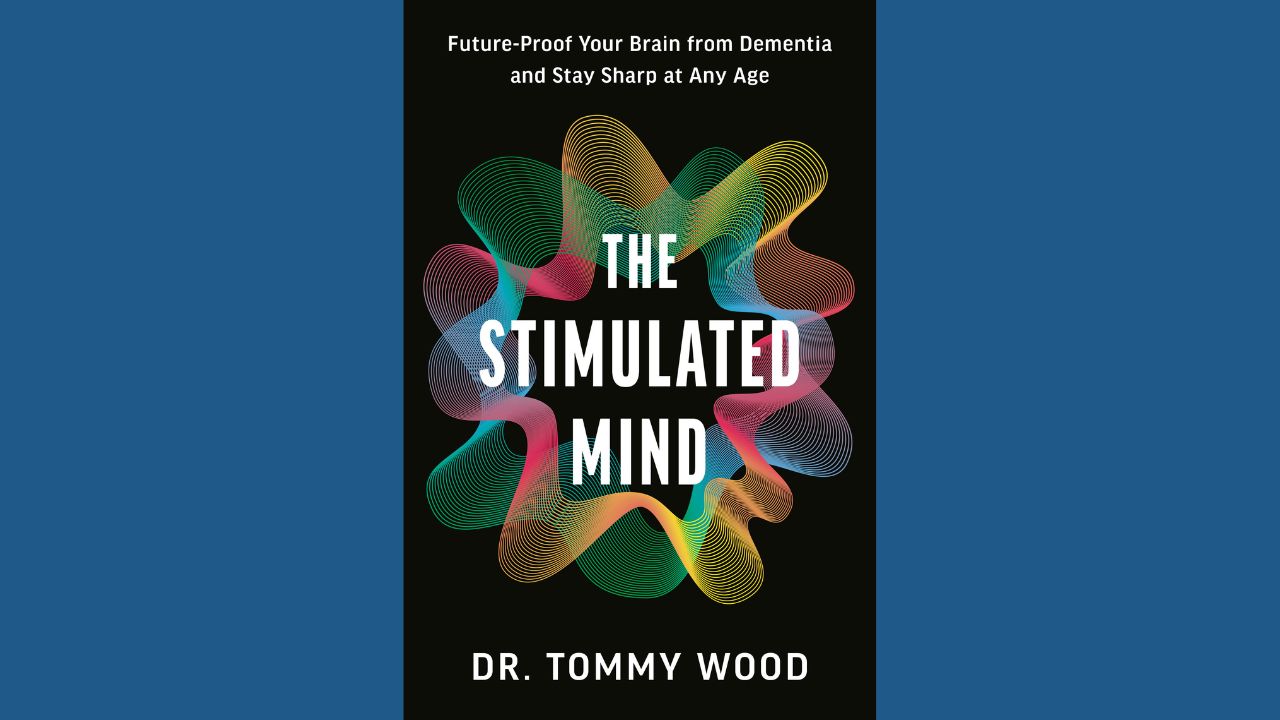
Neuroscientist Dr. Tommy Wood discusses his book, The Stimulated Mind, and breaks down the science of keeping the brain sharp and healthy at any age.
Brain health is shaped by more than age or genetics. The way we exercise, eat, sleep, manage stress, support our metabolism, and stay engaged with the world around us may all influence how well the brain functions over time.
Dr. Tommy Wood, associate professor of pediatrics and neuroscience at the University of Washington, studies brain health across the lifespan, from the neurodevelopment of infants born preterm to cognitive aging in older adults. He directs preclinical research in the University of Washington’s Division of Neonatology and is the author of “The Stimulated Mind,” a book on the science of keeping the brain sharp at any age.
In this Live Talk with Being Patient founder Deborah Kan, Wood discussed how neuroplasticity works, why the adult brain makes almost no new neurons even as the connections between existing neurons keep changing, and which activities can build cognitive reserve. He also addressed the long-term brain health risks tied to preterm birth and concussion, the supplements with the strongest evidence behind them, and the daily habits, from exercise to sleep to social connection, that he relies on himself.
Being Patient: How much of dementia do you believe is preventable?
Dr. Tommy Wood: I think most people would agree, that potentially the majority of cases of dementia are preventable. By that, I mean more than 50 percent. It’s hard to put an exact number on it, although several studies have tried. I’m sure you and your audience are very familiar with the Lancet Commission on Dementia Prevention, run by Professor Gill Livingston, where they estimate that 45 percent of cases of dementia may be preventable.
But when you look at other analyses, including factors that weren’t included in the Lancet report, and you start to factor in things like sleep, nutrient status, and socioeconomic factors, which obviously play a huge role in dementia risk, some estimate that we might be able to prevent upwards of 70 percent of cases of dementia.
Of course, that means we can’t prevent all of them, and there’s still a ton we need to learn, particularly the interactions between different risk factors and genetics. But I think we’re getting to the point where we could say at least 50 percent of cases of dementia are potentially preventable.
Being Patient: Let’s start with neuroplasticity, because I know you’ve done a lot of research on it. My first real awakening to neuroplasticity was when I started to play piano again. I hadn’t played since I was probably eight years old, and my daughter wasn’t taking her lessons seriously, so I recruited her teacher and started to play again. When I first started, all of my attention was on my left hand because I’m right-hand dominant. After about six months, I could look at a sheet of music and not think about my left hand — think in tandem. For me, that’s the closest I got to really understanding neuroplasticity firsthand. Was I correct about that?
Wood: Yeah, I think you were. And I think we’ve made neuroplasticity more mystical and mystifying than it needs to be. All of us are capable of and use the processes of neuroplasticity in our brains every day. It’s essentially just what your brain does in the process of learning and developing new skills and then cementing those. And that’s all aspects of our memory as well — the things that we remember on a day-to-day basis.
We can all do that right into the end of our lives, except potentially in the very end stages of dementia. There are some people who say that the fundamental problem in Alzheimer’s and other dementias is the loss of neuroplasticity. But up until that point, we’re still capable of making new connections, building new skills, building function in the brain.
So anytime you’re interacting with the world and learning something new, you’re driving these processes. But we don’t often challenge those processes in the way that might produce the best outcomes or help maintain function later in life.
It’s very unusual for an adult to decide, “Hey, I’m going to sit down at the piano, and I’m going to struggle, and I’m going to make mistakes, and I’m going to force my left hand to play along with my right hand,” in the months that that takes. But if we do engage in those processes, it’s very clear that, regardless of your age, you can start to build these new functions and drive these processes. And we know that’s a critical underpinning factor when it comes to long-term brain health and cognition.
“I think we’re getting to the point where we could say at least 50 percent of cases of dementia are potentially preventable.”
Being Patient: Okay, so when we’re talking about those processes, does that mean that anything you do that challenges your brain actually forces the neurons to travel in different patterns?
Wood: Yeah, either it makes new connections or establishes different functions across networks of connections in the brain, if that makes sense. Historically, we thought of the brain as, well, this part does this and this part does that, but it’s not really like that.
Anytime you do anything, there are all these different areas of the brain that start to speak to each other in different ways. Neuroplasticity is essentially building or strengthening networks of connections in order to do whatever it is you’re trying to do.
Being Patient: At what age do we stop growing new neurons? Or does that happen throughout the course of your life?
Wood: I think this is where a lot of the misconceptions about the adult brain come from. It’s a great question, because the adult brain does not really make new neurons at all. Most of your neuron production ends very early in childhood, between one and three years of age. You’ll still make a few, but most of your neurons have been created by that point. After that, the rest is just building the infrastructure around those neurons, having them grow and connect to each other, and refining the connections between them.
Once you’re in adolescence and adulthood, there are only two places in the brain that make new neurons: the olfactory bulb, right behind our noses, which helps us smell things, and one part of the hippocampus, which is really important for memory. Everywhere else, you made those neurons a long time ago. But the fact that you can’t make new neurons in most of the brain doesn’t mean you can’t make new connections or improve their function or structure, because there are a lot of other things that go into that.
That’s where, historically, neuroscientists thought the adult brain doesn’t make new neurons, therefore it can’t change or improve. But we know that the neurons you do have are capable of changing their connections through this process of neuroplasticity, even late into life.
Being Patient: Is there a correlation between how many neurons you make as a young child and, say, the trajectory of your brain health or even your intelligence?
Wood: It’s probably more driven by the connections between them. There is some recent evidence that individuals we now call “superagers” — people who maintain cognitive function from their 50s into their 80s, which, as a side note, we also have evidence should be the norm; there are studies going back several decades showing that most people can maintain their cognitive function from midlife into their 80s and beyond, we just haven’t really incorporated that into our thinking — do seem to be making a few more neurons in that part of the hippocampus I mentioned earlier, the dentate gyrus. That’s related a lot to lifestyle and other health factors, which we have some control over.
When you look at neurodevelopment, it’s really the refining of connections between neurons that seems to drive that process. As a good example, there are some neurodivergent conditions where you actually have more connections rather than fewer. One of the most important things about developing a function is making sure you have really good communication in those networks, but if you have too many connections, things get a little too fuzzy and you don’t have that well-defined network that allows for a specific function. So it’s really all about inputs to the brain that help you refine the connections. Sometimes less is better.
Being Patient: As soon as you said “between the ages of 50 and 80,” I thought, what do I need to do? Is it really what we’ve been told — learn a new language, learn to play a musical instrument — or could it be something more simplistic? What do we actually need to do to keep neuroplasticity going and improve our brain health?
Wood: There are several things that go into what we think is required to be a superager, and I’ll come to your question last. Up to that point, people who maintain cognitive function late into life don’t necessarily do anything particularly outrageous or complicated — they’re just quite consistent.
They remain physically active, they maintain reasonably good sleep, they maintain reasonably good physical health, so they avoid diabetes and heart disease, they remain socially connected with friends and family, and they remain cognitively active.
When you look at the types of activities that, in randomized controlled trials, proper scientific studies, can improve cognitive function even later in life, or the activities of people who have a lower risk of dementia later in life, it’s things like dancing, languages, music, complex coordinative sports and activities like yoga and tennis, badminton, ball sports, team sports.
We need to do the kinds of activities that are uniquely human — they’re really challenging, they require multiple skills, and we often do them in social environments. That’s the stuff that really helps build the brain in the first place, because we see that in younger kids, and it helps you build and maintain function later in life.
“people who maintain cognitive function late into life don’t necessarily do anything particularly outrageous or complicated — they’re just quite consistent.”
Being Patient: You mentioned dancing. I was the kid in the back where the teacher would put me because I couldn’t remember any of the patterns. I found that especially challenging. I did some research and found out it’s the basal ganglia that helps you recall those patterns. But then it occurred to me that maybe I should be drawn to things I’m terrible at. Would that help my brain even more if I improved in weaker areas? Or do we even know that?
Wood: It’s hard to say we definitely know that, but the basal ganglia is actually involved in a lot of these activities that we know can help build long-term cognitive reserve or maintain cognitive health, because it’s also really important for language learning. We know that individuals who grow up bilingual have a lower risk of dementia and perform better on certain tests of decision-making and executive function, and that’s thought to be because their brains are constantly having to juggle between two language systems they know very well — their brains become used to handling multiple streams of information at the same time, which is also regulated by the basal ganglia.
To your actual question, though, I do think there’s magic that comes from leaning into something you’re bad at and building skills in that area, because it gives you more redundancy, or buffer, in the system. You’ve built out additional learning processes. You’re really driving neuroplasticity in those areas because you have to build those skills and functions up. It sounds like this is something you’re very interested in doing, but it’s something adults really try to avoid — we hate doing things we’re bad at, especially if other people are going to see us be bad at it. They’re going to see you in the dance class struggling and failing. So rather than thinking of it as a deficit, I’d encourage people to lean into the idea of being a beginner, because we know, again from very good studies, that if you start as a beginner in one of these complex areas — maybe it’s dance, maybe it’s languages, maybe it’s music — you can see improvements in cognitive function quite quickly, because you’re challenging these processes and forcing your brain to focus, pay attention, and build some of these skills.
Being Patient: Before we started this interview, you were telling me about your research on premature-born babies who are now adults. Tell me about that research, because I find it fascinating that we now have the first glimpse into premature-born babies who survived and are now aging. What do we know about premature birth and what happens later in life?
Wood: Yeah, this is something we’re really just starting to learn now. People may not realize that it was only in the 1970s or so that the field of neonatology, looking after newborns, really became established, and that the first babies born preterm had a much higher likelihood of survival — previously, it was unfortunately more likely that they would die rather than survive. There’s been huge improvement in that over the past five decades, but because of that, we’re now getting to the point where the first cohort of people born preterm — about 10 percent of babies in the U.S. are born preterm — are getting into their 50s, 60s, and 70s, and they’re starting to experience the diseases of aging.
There’s some really nice research from Scandinavia, where they have very good data sets that follow their populations all the way from birth to death — it’s very well documented, all the things that happen to them across their life course. You see that the more preterm you’re born — an average baby spends 40 weeks in the womb — the earlier you’re born relative to that, the higher your risk of aging-related diseases later in life, including dementia, but also strokes, heart disease, and even earlier mortality overall.
So those born preterm tend to have a more rapid aging trajectory, and it’s probably related to a whole host of factors. We know that inflammation and other conditions during pregnancy can increase the risk of preterm birth, and they then influence early development as well as later-life risk — that can be genetic, but also environmental, because the same environments that may have affected the health of the mother can affect the health of the individual after they’re born.
So now we’re starting to see those same risk factors that we know exist for dementia more broadly, like heart disease and diabetes, being more common or happening earlier in individuals born preterm, and probably because of that, they’re then at higher risk of experiencing dementia later in life.
Being Patient: One of the things I’ve been thinking about is concussion. What can we learn about brain health in terms of recovery? We know repeated concussion can be very detrimental to brain health and can cause a lot of problems. We know that recovering from a concussion is incredibly important before you get another one, especially in athletics. Is there any insight we should know about recovery and how that relates to overall brain health?
Wood: I mentioned the Lancet Commission on Dementia Prevention earlier — traumatic brain injury is included as one of their modifiable risk factors for dementia in that analysis. So we know that people with a history of traumatic brain injury, which would include concussions, have an increased risk of dementia later in life.
There’s a very recent paper showing that a previous head injury on its own is enough to lead to a diagnosis of dementia in the future, because of the pattern of injury you get. Previously, there was a bit of confusion, because if you looked at the brain of somebody who had a previous head injury or concussion and dementia, you’d see a bit of Alzheimer’s disease, a bit of vascular dementia, and some other things as well — most people don’t have one very specific pattern of how their brain looks when they have dementia; there’s often a lot going on.
But we do know that many of the factors related to how a concussion might affect your brain are also important for brain health more generally. After a concussion — and this has really only changed in the last few years — the recommendation used to be to go lie in a dark room and do nothing for a long period of time because your brain needs to recover. Now we know that as soon as you can, you need your brain to be active again — you need to engage it and do things with it, and with your body as well.
So now, as soon as they’re able, people do graded exercise, aerobic exercise in particular, cycling or walking or jogging, as much as they’re able to, because that produces a whole host of factors we know are really critical for recovery. There are also several nutrients that are probably important for recovery and for long-term brain health — B vitamin status, vitamin D, and omega-3 fatty acids would be other ones.
And now there are studies looking at specific interventions mapped to specific skills that might be affected by a concussion — you might do vestibular or balance training to try to recover that system, because if you don’t have your balance, that affects the activities you do, which can then affect your risk of dementia, because you’re not playing the same sports or staying physically active in the same way. It’s the same for virtual reality training to challenge a whole bunch of cognitive functions, which is another area I do some work in.
This is important for all of us — being able to challenge, build, maintain, and recover functions we’ve lost — because if we don’t do that, we stop engaging with the world in the same way, which can increase our risk even further.
Being Patient: You mentioned some supplements, vitamin B earlier. I’m totally confused about supplements. How do we, as general consumers, know what to take, when, and what’s actually good for us?
Wood: When it comes to supplements, the ones we have the best evidence for are vitamins or nutrients that we know are critical for brain health that we’re not getting enough of from our diet. The ones I’d include there are omega-3 fatty acids, like EPA and DHA — fish oil, or an algae-based supplement if you’re plant-based — vitamin D, and B vitamins, particularly the ones that lower a blood marker called homocysteine, which goes up when you don’t have enough of some of these B vitamins. Homocysteine is a well-established risk factor for dementia when it’s elevated — that’s B12, folate, B6, and riboflavin, which is B2. Those B vitamins are critical. Iron is also really important, particularly in women in midlife — about 10 percent of women are iron deficient, and iron deficiency increases the risk of dementia as well.
If you’re not getting those core nutrients from your diet, having them as a supplement is something we have some pretty good evidence for — there are studies showing that supplementing with an omega-3 or a B vitamin slows the rate of cognitive decline and decreases brain atrophy, for example.
Beyond that, you get into things where the evidence starts to drop off. There’s choline, which comes as something people might have heard of as citicoline — if you look at a brain supplement, it probably contains that, because it’s the supplement that maybe has the best evidence behind it. Most of that evidence exists in people who are already experiencing some cognitive decline, like mild cognitive impairment, rather than people who are cognitively healthy, and you could get an equivalent amount of choline by eating a few eggs — it doesn’t need to come as a supplement. If you’re not getting enough from food, then a supplement could be beneficial.
I’d put creatine up there too. It has much better evidence for maintaining or helping build muscle and strength. One of the best long-term studies of creatine gave 10 grams a day to postmenopausal women in combination with a resistance training program, and it showed potentially some additional benefit for bone health and structure. There are some studies suggesting that in older adults, or those experiencing some element of cognitive decline, creatine may be beneficial for cognitive function, and some other studies suggest it may be helpful for depression, on top of standard therapy rather than instead of it.
But it’s also one of those things where everybody’s going around saying creatine solves everything and fixes everything, which, of course, it doesn’t. There are also some studies in people who are sleep deprived showing that taking high doses of creatine may help maintain cognitive function when you’ve lost a night of sleep.
One of the reasons I talk about creatine in the supplement bucket as something you could experiment with is that it’s the most studied supplement, I think, of all of them, and we know it’s incredibly safe, so you can feel confident recommending it to most people because we just know so much about it and how safe it is.
Being Patient: Okay, so that leads me to the exercise question. Now that I’m in my 50s — I’m a runner, so I used to run seven days a week, which probably wasn’t good, but now I’ve tapered off to three or four times a week and I’m lifting the rest of the days. Is that the right thing to do? I find it hard to put on muscle at my age. So for the brain, is muscle better, or is aerobic exercise better, or is it a balance, like everything else?
Wood: The answer is yes — they’re both important, and it sounds like what you’re doing is a nice balance. Traditionally, I think certain groups have shied away from resistance training because they’re worried about getting injured, or because of some fairly ridiculous societal norms about what looks good or what people should or shouldn’t do.
But we have very good evidence now, from trials, showing that resistance training in midlife and later life significantly improves elements of cognitive function. The same is true for aerobic exercise, especially if you layer on some intensity, like occasional sprints where you’re really pushing yourself intermittently for short periods — it’s not like you have to spend all your time doing that.
Resistance training versus aerobic exercise actually affects different parts of the brain, which is one of the reasons you need to do a bit of both. Aerobic-type exercise, like brisk walking and upward in intensity, is particularly beneficial for the gray matter of the brain — the wrinkly outside of the brain — and the hippocampus, which is really important for memory. Resistance or strength training seems to be particularly beneficial for the inside, middle part of the brain, called the white matter, which is where we have the fast connections between different parts of the brain and between the brain and the body. So aerobic exercise is particularly good for memory, and resistance training is particularly good for things like executive function and decision-making.
Ideally, you’d do a bit of both — some kind of aerobic exercise two or three times a week, maybe adding a few sprints on one of those days, and then lifting weights once or twice a week. That gives you the best balance based on the evidence we have.
One more thing you could layer on, and this can make it most efficient, is replacing your running with something like dancing or badminton — a team or ball sport where you’re doing some sprints, it involves coordination, you have to learn a new skill, and you’re doing it in a social environment. If you can layer that on top of your aerobic sessions, or do it instead — go to a dance class instead of jogging, if that’s what you want to do — there seems to be some additional benefit from exercises that require you to coordinate and respond and react, on top of the physical benefits of the movement.
Being Patient: Tell me what you do personally. What’s your routine? Are you taking supplements? What can we learn from you, and how has being so aware of the latest research changed your life?
Wood: One thing I’ve really come to appreciate is that if you relatively regularly do some of the basics we’ve talked about — and perfection isn’t required, and I think chasing perfection actually makes a lot of these things worse, because it becomes stressful in its own right — that’s probably enough for the vast majority of people. So that’s essentially what I focus on.
I cook most of our food at home — it’s whole foods, nutrient dense, but I’ll occasionally have a protein bar, and my wife and I will go for ice cream. I take a basic multivitamin — I think there’s some good evidence for that, no heroic, massive doses of anything, just getting the basics covered. If I haven’t eaten a lot of fish regularly, I’ll take an omega-3 supplement. I take creatine every day — I’m an athlete, I compete, so it’s helpful for me for performance as well. I exercise every day, a combination of strength and aerobic training. I try to make sure I sleep eight hours a night, and I try to have a good relationship with my wife and my colleagues and maintain social interactions. That’s basically it.
Being Patient: Before we go, tell me a little about “The Stimulated Mind”. Why did you write this book, and what can people expect to get out of it once they read it?
Wood: I tried to write the book I could give to my friends and family if they asked me what they can do for their brain health — if they’re worried about either their cognitive function today or their long-term brain health. The book covers both.
I felt like other books out there either focused on just one thing, like sleep or diet, and that can be valuable because you can go into more detail in a whole book rather than in one chapter. But I think there’s enough you can take away from a single chapter to actually make changes you understand and that have an effect. And then there are books in the brain health and longevity space that are incredibly dense — endless lists of tests and supplements that nobody understands and nobody’s going to buy.
So I tried to navigate across all of those things. It’s obviously very evidence-based — I’m a scientist at heart — but it’s also very approachable and practical. I hope people learn some interesting things about their brains, and the thing I hear the most, which I really like, is that people have felt able to make changes in their lives because of it, which isn’t always the case.
The book is very hopeful — I want people to take away hope. There’s so much you can do for your brain, and it’s not as daunting or difficult as it’s often made out to be. That’s really what I want people to take from it: hope for what they might be able to achieve for their brain.
FAQs
Not all cases of dementia can be prevented, but researchers estimate that a substantial proportion may be preventable or delayed by addressing modifiable risk factors throughout life. The 2024 Lancet Commission identified 14 potentially modifiable risk factors — including physical inactivity, high blood pressure, hearing loss, social isolation, diabetes and traumatic brain injury — and estimated that addressing them could prevent or delay about 45 percent of dementia cases.
Yes. The brain retains the ability to adapt throughout life through neuroplasticity, which includes changing and strengthening connections between neurons as we learn and practice new skills. Older adults can still form new memories and improve at new activities, although some aspects of plasticity decline with age.
There isn’t one single “best” exercise. Evidence supports staying physically active and incorporating different forms of movement, including aerobic and strength training. Physical activity is associated with better cognitive health and a lower risk of dementia, although researchers have not established that exercise alone can prevent Alzheimer’s disease. Doctors guidelines generally recommend at least 150 minutes of moderate-intensity aerobic activity per week along with muscle-strengthening activity on at least two days.