The Friendship Habit That May Help Keep Your Brain Healthy
After decades, my running group might be scattered across the world, but we show up for one another. Research suggests that kind of connection matters for brain health and longevity.
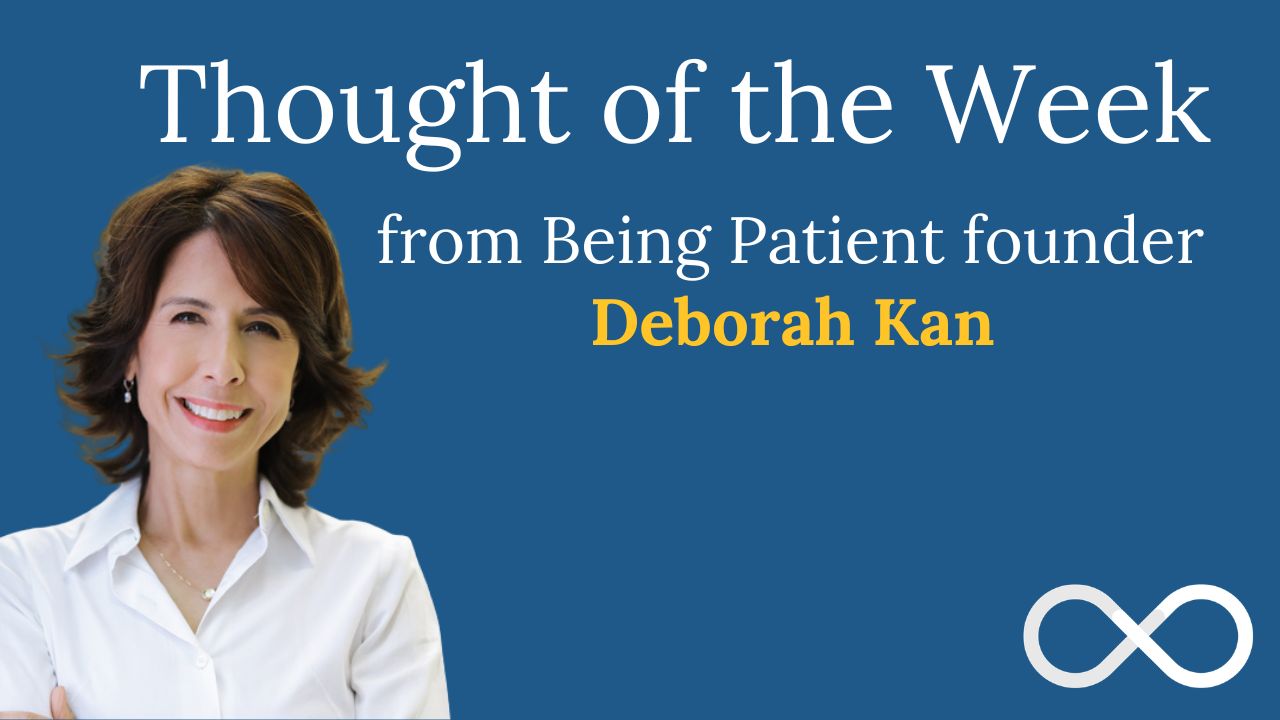
Deborah Kan is the founder and CEO of Being Patient, a journalism-driven news platform on Alzheimer’s, dementia, and brain health that she launched after her mother’s Alzheimer’s diagnosis and years as a journalist for the Wall Street Journal. She built Being Patient to translate complex dementia research into clear, unbiased reporting for patients and caregivers navigating the same uncertainty she once faced. Connect with her at deborah@beingpatient.com.
Dear readers,
I am writing to you from Hong Kong. My husband and I raised our children here before we moved back to the U.S., after 20 years abroad. Coming back has never once felt like a visit. It feels like coming home. Part of that is family. A bigger part than I expected is a group of friends who call ourselves the Running Babes.
I have run with some of them since before I was married. We have moved through every stage of life on those runs, marriage, small children, grown children, and we have never needed a cafe to do it. Work, our kids, the state of the world, all of it gets sorted somewhere along the route. This group has saved me thousands in therapy bills.
When I am back, we pick up exactly where we left off, as if I never left. There is no warming up, no catching up on the basics. We run, and the conversation resumes mid-sentence, the way it does with people who knew you before you became whoever you are now.
Years ago, a neurologist who has spent two decades studying people who live past 90 told me what the ones who keep their memory tend to have in common. It was not diet. It was not genes.
Here’s what she found.
I always think about a conversation I had a while back with Dr. Claudia Kawas, a neurologist at the University of California, Irvine, who has spent two decades running the 90+ Study, one of the longest-running studies of people who live into their 90s and beyond. Her team went looking at people over 90, some had the amyloid plaques associated with Alzheimer’s in their brains but had never developed dementia. They wanted to know what those people had in common. The one commonality that they could find was social engagement, roughly eight hours of it a day.
When I told her that sounded like an enormous amount, she was matter of fact about it. Talking to another person is not passive, she explained. You take in something new, connect it to what you already know, shape a response, and store the exchange. Conversation is a workout. The brain is busy the entire time. The trouble, she told me, is that we discount it. The effect of being with other people is “always minimized in our head,” she said, because it does not come in a bottle.
The more I looked at what Being Patient has reported on this, the more that one conversation held up. The researcher Angelina Sutin, whose work we have covered, draws a distinction. Loneliness is not the same as being alone. You can be in a crowded room, on a full calendar, surrounded by people, and still feel that you belong to none of it. What the Running Babes have is not proximity. It is belonging, the kind you can only build by showing up for the same people over years and maintained by a very busy WhatsApp thread!

Photo credit: South China Morning Post
Dr. Mark D’Esposito, a neurologist I interviewed, once told me about a woman who turned 90 and had 150 people come to her birthday party. She plays golf, she stays active, and she is, in his telling, remarkably well. He did not think that was a coincidence. She had kept 150 people close, and her brain seemed to know it.
And true to what I am doing in Hong Kong right now, Being Patient has reported on research suggesting that people who go through a lonely stretch and then rebuild their connections may lower their risk, in some findings even more than people who were never lonely at all. Reconnection counts. The door does not close because you drifted for a few years.
The research on loneliness is still evolving. A large European study we covered, following more than 10,000 older adults, linked loneliness to worse memory but not necessarily to faster cognitive decline, and the experts did not fully agree on how tightly the two are bound. Loneliness and the aging brain are clearly connected. Whether one drives the other, and how, is still being worked out.
In my view, friendship is a big piece of the puzzle to achieving brain health and longevity. Humans were built to interact with one another. We learn from each other and expand our thinking through conversations. The people you keep, and keep showing up for, may be doing as much for your brain as anything a doctor can prescribe.
So if there is someone you have let slip, an old friend, a sibling, a group you loved and lost track of when life got too busy, take this as your reason to reach back. Of all the things that shape how we age, this is one of the few you can change today. Despite the fact that many of the Running Babes are now living in different countries, we always show up for one another on a text thread or sometimes endure a long flight to reconnect. The effort can be big or small but the impact on the brain is clearly the same.
With hope,
Deborah
Related Articles
No Related Post Found