What the Retina Can Reveal About COVID-19’s Effect on the Brain

Retinal cells exposed to COVID-19’s spike protein showed Alzheimer’s-like changes — and an experimental cancer drug helped reverse them.
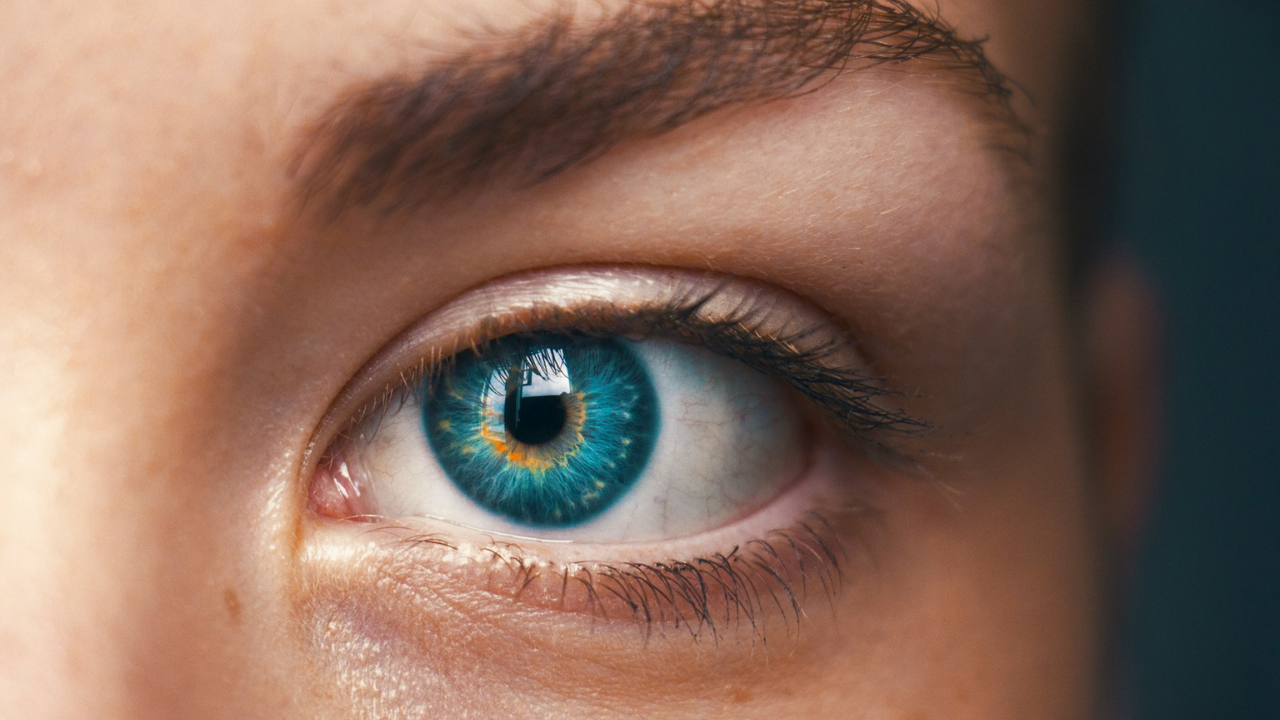
Researchers continue to explore a possible connection between COVID-19 and Alzheimer’s disease. Direct experiments on the brain are challenging due to its inaccessibility, but the retina — part of the central nervous system — offers a rare, accessible window. Studying retinal neurons could yield new insights into both diseases and how they might be linked.
This is what drew Sean Miller, a neuroscientist who has spent his career studying Alzheimer’s disease, to Yale University’s ophthalmology department. He told Being Patient, “I was really interested: Can we use the retina as a model?”
Using human retinal tissue collected during autopsies — including samples from four people who had died of COVID-19 — he and his team found that SARS-CoV-2 promoted the formation of beta-amyloid plaque, a hallmark of Alzheimer’s.
In their recent Science Advances study, Miller’s team also showed that blocking a specific receptor on neurons reduced beta-amyloid build-up, pointing to a potential treatment COVID-19-related brain changes. These results offer clues for treating long COVID and for understanding how Alzheimer’s starts and progresses.
Insights from autopsies
After a person passes away, their brain tissue quickly deteriorates, making it close to impossible for scientists to study an actual human brain’s neurons in a lab setting. But Miller was confident that the gelatinous substance that makes up the bulk of the eye would preserve the neurons in the retina, keeping them alive long enough to run experiments.
So, he and his team collected retinal samples from recent autopsies and confirmed that the nerve cells were still alive and able to conduct electricity. Then, they used the retinal tissue to grow tiny brain-like models, called organoids, that can provide information about how viruses and drugs would affect that organ in a living person.
After confirming that the retinal organoids had all the necessary cells and components, Miller’s team treated them with Spike 1, the protein that the SARS-CoV-2 virus uses to latch onto and infect human cells. A fluorescent dye revealed that the retinal cells deposited more beta-amyloid (that biomarker for Alzheimer’s) after they were treated with Spike 1.
Furthermore, when they checked the retinas of the four people who had died while infected with COVID-19, the researchers found high levels of beta-amyloid — and some of the plaques were associated with the virus’s Spike 1 protein.
Repurposing a cancer drug
Miller sees these results as evidence for the antimicrobial protection hypothesis — the idea that beta-amyloid clusters form to trap and neutralize harmful microbes. He and his colleagues think that beta-amyloid production and plaque formation are a normal defense mechanism for the central nervous system.
According to their theory, problems like neurodegeneration in Alzheimer’s disease, or brain fog, fatigue, and other neurological symptoms present in some cases of COVID-19 would only start to occur when the plaques accumulate and the central nervous system fails to dispose of them quickly enough.
To prevent this, Miller and his team looked for a way to reduce the amount of beta-amyloid that the neurons deposited following exposure to Spike 1. They knew from previous studies, Spike 1 can bind to neuropilin-1 (NRP1) — a receptor found both on nerves (where it plays a role in how neurons grow) and in the circulatory system (where it promotes the growth of new blood vessels).
Miller’s team knew of a possible fix for this: Developers of cancer drugs have already created experimental NRP1 inhibitors, designed to block the receptor and prevent blood vessel growth that can feed tumors. Miller’s team used one of these inhibitors on their retinal samples and found that it reduced beta-amyloid deposits after exposure to Spike 1.
To Miller, this suggests that an NRP1 inhibitor could offer relief for people who experience neurological symptoms that stem from COVID-19. He and his colleagues are now testing different versions of these inhibitors in retinal organoids to find the most effective.
The translational potential
Miller wants to see which of the existing experimental NRP1 inhibitors could be most effective at lowering the amount of beta-amyloid that neurons deposit upon detecting the Spike 1 protein. Right now, he and his colleagues are using retinal organoids to test a variety of these molecules.
However, not everyone is convinced this would be a widely effective treatment strategy.
First of all, scientists are still exploring a variety of explanations for the neurological symptoms of COVID-19, like neuroinflammation and changes to blood vessels that supply the central nervous system. It’s not yet clear how much of a role beta-amyloid plaques may play in COVID-linked fatigue and brain fog.
Second, there is still some uncertainty about how SARS-CoV-2 causes beta-amyloid accumulation in a living person. Eugene Duff, a computational biologist at Imperial College London, recently published a study linking beta-amyloid pathology to COVID-19. He told Being Patient that the “mainstream expectation” is that, for the most part, the virus affects the brain by activating immune cells throughout the rest of the body. In this case, changes in the central nervous system would be driven mainly by the body’s own immune cells as they respond to the infection. In fact, previous research has shown that overactive immune cells in the vessels that supply blood to the brain can drive the accumulation of beta-amyloid.
For his part, Miller does not view these two theories as mutually incompatible. He pointed out that the blood-brain barrier can become leakier when the immune system is fighting an infection, offering more opportunity for the Spike 1 protein — which can accumulate in a variety of places throughout the body, including the protective layers that surround the brain — to enter the central nervous system.
Besides, he pointed out that his study was not the first to identify evidence of SARS-CoV-2 infecting the retina in people whose deaths were linked to COVID-19.
Duff maintains some skepticism, but he was intrigued by the fact that Miller and his team found Spike 1 protein surrounded by beta-amyloid in the retinas of people who had been infected with COVID-19. Duff would just like to see data from more than four people before he can be convinced of Miller’s ideas.
Miller agreed that he would have liked to include more than four people in his study, but he said that it had been difficult to acquire samples previously. Now that more researchers know about the work that he is doing, getting samples is becoming easier, and he has plans to see how universal his findings are.
As for the larger question of whether SARS-CoV-2 and other microbes play a role in Alzheimer’s disease, Miller said any answer would have to account for not just beta-amyloid plaques, but also tau tangles and neuroinflammation — the disease’s other hallmarks.
“There’s so much we just don’t know, but at least if we know an exacerbator of pathology, like a virus, it could be a step in which we could step in and intervene,” he said.