Rethinking Parkinson’s: A Disorder of Brain Networks Rather than Movement
Scientists propose a bold new way to understand Parkinson’s that could open the door to new treatments.
Parkinson’s disease (PD) begins deep in the brain as dopamine-producing neurons progressively die off.
The brain regions where these cells die have been viewed as silos, with the main symptoms affecting more than one million Americans — tremors, slow movements, muscle rigidity and postural problems — attributed to degeneration of these areas.
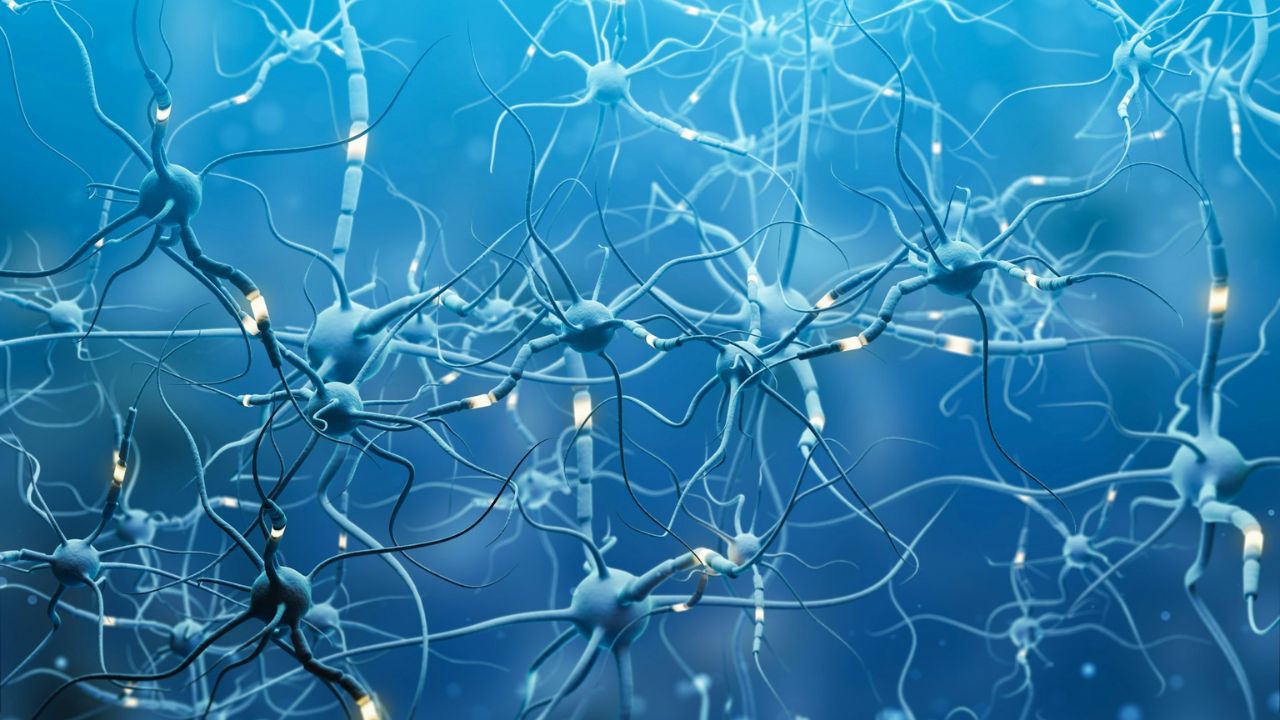
A recent study published in Nature zooms out to focus on how these networks of neurons interact within a single coordinated network of firing neurons.
The network, called the somato-cognitive action network (SCAN), helps plan and coordinate actions and movements, and may provide a better explanation for what goes wrong in Parkinson’s. This may also help account for other symptoms like pain, apathy and problems with blood pressure regulation.
“The idea grew out of a simple observation: Parkinson’s disease affects far more than isolated movements,” study author Hesheng Liu, a brain scientist at Changping Laboratory and Peking University in Beijing, told Being Patient. “Patients do not merely lose control of specific muscles — they lose the smooth integration of thought and action across the whole body.”
Modulating how cells fire in this brain network also provides a novel target for treating Parkinson’s, though more trials and studies are needed before these findings make their way into the neurologist’s office.
What is the SCAN network?
The SCAN is a coordinated circuit of firing brain cells that integrates information about movement, thinking, and bodily regulation.
When Dr. Nico U. Dosenbach, a pediatric neurologist and professor at Washington University in St. Louis, and a co-author of the study, first described this network in a 2023 study, he recalled thinking, “These are also all functions that are broken in Parkinson’s,” potentially explaining lesser known symptoms like constipation, chronic pain, or apathy.
It sounds counterintuitive, but these functions are all connected. If you want to stand up after sitting, you need to increase blood flow to the brain to prevent fainting. As a Parkinson’s symptom, it aligns within the SCAN framework.
“This idea, then, that there are cortical brain regions that integrate these various symptoms and, in fact, are potentially more highly connected to the deeper brain structure we target with our therapies is very intriguing,” said Dr. Holly Shill, medical director of Barrow Neurological Institute’s Muhammad Ali Parkinson Center, who wasn’t involved in the research.
How the network misfires in Parkinson’s
The researchers used brain imaging data from 863 people — including many with Parkinson’s as well as healthy controls — gathered from multiple datasets.Though Dosenbach and his team suggest that SCAN may be responsible for non-motor symptoms like chronic pain and apathy, those weren’t assessed in the study.
Dosenbach and his team found that the brain regions where cells die off leading to Parkinson’s were more closely integrated within SCAN than another motor-related network.
Dr. Brian Kopell, neurosurgeon and director at the center for neuromodulation at the Mount Sinai Health System, who wasn’t involved in the research, told Being Patient that the study reveals an “unseen dimension of how this particular critical area organizes itself.”
Compared to healthy brains, the SCAN in Parkinson’s was hyperconnected. The cells were firing with too much synchrony. Brain cells in different regions were firing at the same time, rather than waiting to receive and integrate information from each other. Other diseases, like epilepsy, also occur when brain cells are firing at the same time.
“It seems like to have proper processing, you have to have the right amount of brain regions being in sync – not too much, not too little,” said Dosenbach.
Next, they looked at people who received deep brain stimulation, a pacemaker inserted deep into the brain to compensate for the neurons that die in the disease.
In a small subset of 14 individuals who had brain imaging data over time, as well as information about their symptoms, having the device closer to SCAN was linked with better symptom control over the course of a year. Other treatments, like the drug levodopa which helps increase dopamine, and focused ultrasound also seemed to work through this network.
Targeting SCAN to treat Parkinson’s
The researchers also ran a small study to see if transcranial magnetic stimulation (TMS) targeted at SCAN would be effective at treating the disease. TMS is a non-invasive treatment that uses a magnetic coil to stimulate specific areas of the brain and alter their electrical activity.The researchers randomized 36 people to either receive TMS targeting the motor network in the brain or SCAN for two weeks of twice daily sessions. Reducing SCAN connectivity led to greater symptom improvements than targeting the motor network.
“It’s interesting, but it’s not definitive by a long shot,” said Kopell. While more research is needed, he was intrigued by the prospect of modulating this network to treat involuntary freezing and balance issues, which aren’t well managed by current treatment approaches.
Moving forward, Shill and Kopell say it’s important for other researchers to replicate the findings. Shill is also interested in testing whether modulating this network would affect non-motor symptoms, like apathy or blood pressure regulation.
“It challenges long-held dogma about how the brain is organized,” Kopell said of the study. The preliminary data supports future research targeting the network but “for it to reach the level of clinical care, that’s going to take some time.”