New Studies Reveal When Alzheimer’s Biomarkers Begin to Accelerate
Researchers identified key ages when Alzheimer's-related brain changes speed up, while another study found today's blood tests still fall short of predicting who will develop cognitive decline.
For decades, doctors could only diagnose Alzheimer’s after death by looking for telltale clumps of misfolded proteins in the brain. Under the microscope, dark splotches between cells mark beta-amyloid plaques, accumulations of misfolded proteins that light the inflammatory spark.
Within the neurons, the dark beads and fuzzy threads signal tau tangles — proteins that once stabilized the intracellular highway but have since misfolded, damaging the neurons.
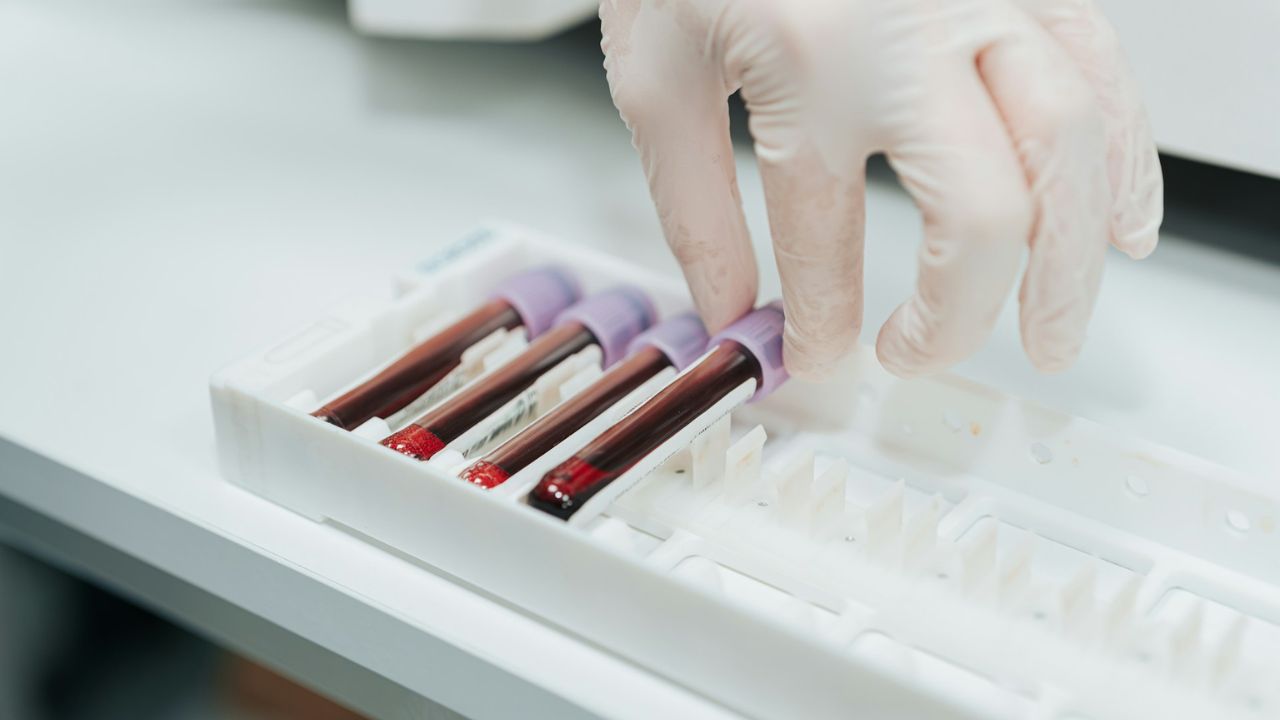
Now, doctors and researchers use a variety of blood, cerebrospinal fluid, and brain imaging biomarkers to confirm the diagnosis in people at the earliest stages of symptoms and recruit people for clinical trials to try and prevent the disease.
“There’s a tremendous amount of optimism,” Nicholas Ashton, senior director of the fluid biomarker program at Banner Health, told Being Patient, that accurate blood-based biomarkers could one day help screen older adults to see who is at risk of developing the disease.
Recent studies from the Mayo Clinic and USC provide more insight into how these biomarkers change with age and cognitive decline. While they add more pieces to the puzzle, blood biomarkers still have a ways to go in predicting cognitive decline in at-risk individuals.
How Alzheimer’s biomarkers change with age
The Mayo Clinic study tracked over 2,000 older adults as they aged to track changes in blood biomarkers, brain imaging, and cognitive decline.
Mingzhao Hu, a researcher at the Mayo Clinic who authored the study, told Being Patient that “many Alzheimer’s-related biomarkers and cognition do not change with age in a simple straight-line pattern.” At certain ages, there were breakpoints where the trajectory of a biomarker’s increase steepened.
There were two broad age windows where the changes in biomarkers accelerated. Around age 60, the speed of cognitive decline increased alongside the accumulation of beta-amyloid in the brain, as measured by amyloid PET scans. Then, in the late 60s and early 70s, the brain’s memory hub, the hippocampus, shrank faster. Alongside the shrinkage, the levels of many blood biomarkers increased faster too.
Ashton, who wasn’t involved in the study, said this wasn’t surprising since many of these blood biomarkers provide a proxy measure of beta-amyloid in the brain. The levels of tau biomarkers in the brain increased linearly with age, showing no breakpoints.
“This clustering suggests a potentially important window where age-related neurodegenerative processes become more common at the population level,” said Hu.
While the study provides a more granular picture of Alzheimer’s-related brain changes, Hu cautioned that it only describes population-level trends. “They are not a personal countdown clock, and they should not be used to self-diagnose or predict an individual’s future.”
Can biomarkers predict the trajectory of cognitive decline?
Meanwhile, researchers at USC reanalyzed data from a failed clinical trial of the anti-amyloid drug solanezumab. The drug was tested to see if it would prevent people with high levels of beta-amyloid in the brain who are at high risk of Alzheimer’s from developing cognitive decline.
They looked at data from over 1,600 people who received cognitive tests for four to seven years. About a third received solanezumab, a third received placebo, and a third had low beta-amyloid levels and were followed as part of a companion study.
Around 77 percent — including many with beta-amyloid plaques at the start of the study — did not show any cognitive decline. Another 16 percent declined slowly, while 7 percent declined fast. Even with a combination of biomarkers and brain scans, the researchers could predict someone’s trajectory of decline with 70 percent accuracy. Individual biomarkers were even less predictive.
Michael Donohue, professor of neurology at the Keck School of Medicine of USC, who authored the study, told Being Patient that the levels of pTau-217 alone weren’t reliable enough to predict cognitive decline. Most of the participants were white, which means the study results may not generalize to Black and Hispanic Americans, who are at higher risk of Alzheimer’s.
Predicting the future of blood tests
Although pTau-217 blood tests are becoming more popular among researchers and increasingly used in clinics, Ashton explained they don’t provide a lot of information about tau tangles, which are often linked to cognitive decline.
Early data from a new study tracking healthy older adults suggests that pTau-217 may predict who is at risk of cognitive decline and dementia in the next five to ten years, but researchers emphasize that more work is needed to pin down exact risk estimates.
Looking ahead, he sees eMTBR-tau243 as the next major biomarker. Unlike existing blood tests, it may provide a measure of tau tangles in the brain. Earlier this year, Alamar Biosciences revealed an eMTBR-tau243 blood test that researchers could use to see if it can up the predictive power.
Ashton believes that this new tau blood biomarker could fill that gap.
“What we are starting to think about is a better biomarker for neurodegeneration,” said Ashton, noting that the current biomarkers aren’t specific enough. Scientists are developing alpha-internexin and pentraxin receptor blood tests that might fill the gap.
With more blood tests hitting the market, Ashton believes people will get these tests outside of a doctor’s clinic.
“That’s not what I advocate for, but I think it’s inevitable sometime in the future,” he said. Right now, he emphasized, there’s a very narrow set of questions that these tests answer: In the context of older adults that have cognitive problems, the test might rule out or help confirm Alzheimer’s as a cause. Outside that context it isn’t clear what a positive test means.

FAQs
While accurate blood tests that measure biomarkers like pTau-217 provide a proxy estimate of beta-amyloid in the brain, that alone does not predict decline in healthy people. Right now, these tests are only used to rule out Alzheimer’s as a cause of cognitive decline, or to confirm a diagnosis.
Recent research suggests that Alzheimer’s biomarkers and cognitive decline don’t change in a straight line, they accelerate at certain ages. Around age 60, beta-amyloid starts to accumulate faster and in the late 60s and 70s, brain shrinkage and blood biomarker increases speed up. But these changes come from population averages and there is variation in trajectories among individuals.
Even a combination of the best available biomarkers is only about 70 percent accurate in predicting cognitive decline, making them ineffective for clinical use. Scientists are actively developing next-generation biomarkers like eMTBR-tau243 to track tau tangles and which may be better at predicting cognitive decline.