GLP-1 Semaglutide Fails to Slow Alzheimer’s Despite Biomarker Changes

The GLP-1 drug semaglutide failed to treat Alzheimer’s across two large trials despite lowering the levels of some Alzheimer’s-related biomarkers.
When Novo Nordisk announced that their clinical trial of semaglutide, the glucagon-like peptide-1 (GLP-1) drug, sold in different formulations as Rybelsus, Wegovy, and Ozempic, failed to treat early-stage Alzheimer’s across the more than 3,800 trial participants, researchers who spoke to Being Patient were eager to see the full data.
In its much-awaited presentation at the 2025 Clinical Trials on Alzheimer’s Disease conference on Dec. 3, the drugmaker showed that its diabetes and obesity pill semaglutide also failed to slow the progression from mild cognitive impairment to mild Alzheimer’s. But the drug did lower the levels of some biomarkers of Alzheimer’s and inflammation in the cerebrospinal fluid and blood.
The trial was well executed and Novo Nordisk was transparent with their negative results, Laura Nisenbaum, executive director of drug development at the Alzheimer’s Drug Discovery Foundation, who wasn’t involved in the study, told Being Patient. “There is no ambiguity about it — there was no difference in clinical outcomes with the treatment.”
Why Novo Nordisk thought semaglutide was a promising treatment
Novo Nordisk decided to test the drug based on studies looking at electronic health records that found people taking semaglutide for diabetes and other indications had a lower chance of developing Alzheimer’s.
But at the time the company was considering the trial, Peter Johannsen, international medical vice president of Novo Nordisk, told Being Patient that blood biomarkers weren’t developed to the extent where they could be used to screen for people at-risk while cognitively healthy and would require PET scans or lumbar punctures, making a large study difficult to run.
At the same time, he said two small trials also showed that semaglutide might be promising for early stage symptoms.
But not everyone thought the data surrounding GLP-1s was so promising. Sarah Ackley, a dementia epidemiologist at Brown University wasn’t surprised the drug didn’t slow cognitive decline. She told Being Patient that the people taking GLP-1s tend to be wealthier, healthier and have better preventive care which also reduces Alzheimer’s risk. In other words, the people with access to these drugs had other protective factors against dementia.
In addition, Alzheimer’s takes decades to develop but the observational studies suggested that the GLP-1 drugs had an effect too fast for the drugs to be the real cause. “This suggested that the observational findings were likely influenced by preexisting differences, rather than the drugs themselves,” said Ackley.
Semaglutide fared similar to many drugs that treat other Alzheimer’s risk factors, like herpes virus infection or high cholesterol, where the benefits in electronic health records failed to show in well-controlled clinical trials. Before semaglutide, other GLP-1 drugs, like liraglutide, had faltered in clinical trials.
Small improvements in biomarkers, no changes in cognitive ability
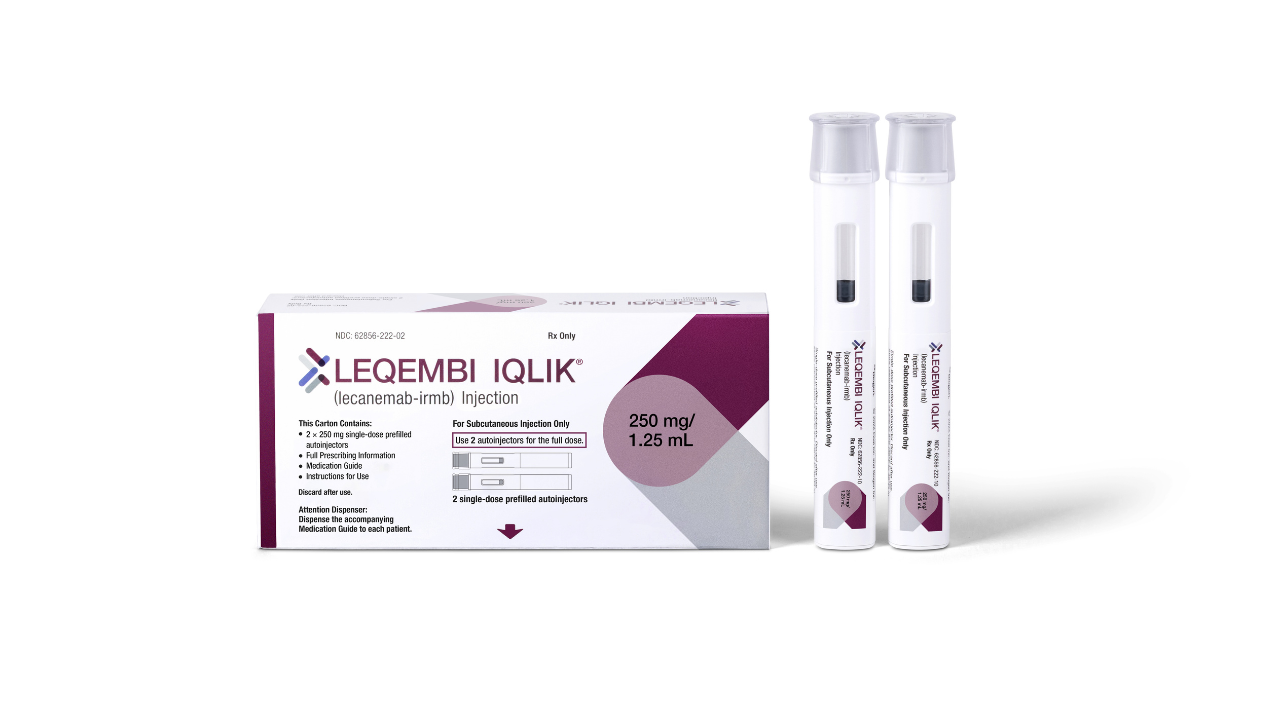
Novo Nordisk also believed that the drug might provide benefits by impacting inflammation, rather than directly targeting Alzheimer’s beta-amyloid plaques like FDA-approved drugs Leqembi and Kisunla.
“Our underlying hypothesis was [that] if we can suppress peripheral inflammation, we will have a beneficial impact on cognition,” explained Dr. Jeffrey Cummings, professor at the University of Nevada, Las Vegas, presenting on behalf of Novo Nordisk. Despite lowering inflammation, “we did not have the corresponding benefit on cognition that we had hoped for.”
Nathaniel Chin, medical director of the Wisconsin Alzheimer’s Disease Research Center, told Being Patient that even though we think of the brain and the rest of the body as connected, these findings show that a reduction in inflammation throughout the body doesn’t necessarily translate to the brain.
Although some of the data suggests the drug moved the needle on certain Alzheimer’s-specific tau biomarkers in the cerebrospinal fluid (but not in the blood) by about 10 percent. Dr. Peter Johannsen, Novo Nordisk’s international medical vice president, explained during the session that approved anti-amyloid drugs Leqembi and Kisunla reduce the levels by 30 percent. “You probably want more than a 10 percent change in those biomarkers before you enter into Phase 3,” he said during the Q&A portion of the talk.
Nisenbaum said that the number of participants who provided cerebrospinal fluid samples was very small and since the drugmaker looked at many different biomarkers, “it’s really hard to know how robust these findings are.”
However, if the biomarker results hold true, neurologist Dr. David Weisman of Abington Neurological Associates told Being Patient, it shows “that a drug with minimal effect on tau should be considered a failure” at an earlier trial stage.
What’s next for semaglutide and GLP-1s?
Novo Nordisk is still in the process of analyzing data. After which, they’ll decide whether to continue pursuing semaglutide as a treatment. “Presently we cannot share future plans,” said Johannsen.
Ackley, the epidemiologist at Brown University, said it’s important to get a clearer idea on the mechanism by which semaglutide might treat Alzheimer’s before further testing.
“We have to consider the possibility that we were mistaken,” she said. “We’ve learned something important from this trial, and a careful reassessment of our research priorities will strengthen the work we do going forward.”