Can We Reset Cellular Aging?
Dr. Michael Fossel explores whether targeting cellular aging could open a new path for treating Alzheimer’s disease, focusing on telomeres, cell senescence and the broader biology of why cells lose function over time.
Aging begins long before we can see it. Inside the body, cells gradually lose their ability to repair damage, recycle waste, and function properly — changes that some researchers believe may help drive Alzheimer’s and other age-related diseases.
Dr. Michael Fossel, MD, PhD, is a physician-scientist and recognized expert in aging and telomere biology. He is chairman of the board of Telocyte, a biotech company developing telomerase therapy for Alzheimer’s disease, with FDA-sponsored human trials planned to target the underlying disease process. Fossel has authored more than 100 scientific publications and lectured internationally, including at the National Institutes of Health.
His work examines how cell senescence — when aging cells stop functioning properly and can contribute to chronic inflammation — may help drive age-related diseases, including Alzheimer’s.
In the interview with Being Patient Founder Deborah Kan, Fossel argues that aging is not simply wear and tear, but a breakdown in the body’s ability to maintain and repair cells over time. He explains why lifestyle habits may help slow aging but are unlikely to reset it and outlines why his research is focused on whether telomerase therapy could restore cellular function in Alzheimer’s.
Being Patient: What are telomeres?
Dr. Michael Fossel: I think the easiest thing to do is say they’re clocks. They’re cellular clocks that tell your cells how old they are. It lets your cell know whether I’m young or old.
Being Patient: It’s been explained to me they’re end parts of your DNA that shorten as we age. So that’s the act of biological cellular aging. Is there a way to stop that shortening of the telomeres in order to really improve our biological age?
Fossel: I’ll say three things about that. One is every time your cells divide, the telomeres shorten. So as long as you’re going to have new cells, for example, if you scratch yourself or your hair grows, you need new cells. So you can’t stop that and you don’t want to because you want to stay alive.
The second thing is there is nothing you can do that would stop that or reset that that’s currently available. There are probably ways you can slow it — eat right, exercise. And that will slow the aging process, true. But it doesn’t stop it.
We know that we can reset it in the laboratory. And in fact, we know it resets in the cells you came from. When you think about it, every cell in your body goes back 4 billion years. You got it from your mother, who got it from her mother, who got it from her mother, and so on. And same with your mitochondria, back about half that far.
But you didn’t inherit an old cell, a 4 billion-year-old cell. It was a young 4 billion-year-old cell. And yet you and I age over the past few decades. So we know that you can reset them. The question is, can we do it? The answer is, I think we can.
Being Patient: Does metformin actually slow down the shortening of your telomeres?
Fossel: I don’t think it does. We know there are a set of compounds that can help activate telomerase. Some of the astragalins, for example, and there are probably other compounds that do. And I am, let’s just say, I’m not impressed with the metformin data or a lot of the other data. That doesn’t mean it’s wrong. It just means I don’t quite see it that way.
Being Patient: Tell me what your focus of research is as applied to cellular aging.
Fossel: Let me look at it two ways. One is sort of the broad way. The other is in a much more practical way. The broad way is to say that almost everything that we talk about, I gently make fun of as “short Jeopardy.” That is, people want to talk about how to live an extra five years and not have Alzheimer’s or not have osteoporosis or osteoarthritis. And I appreciate that. That’s a good idea. But that would be like saying, I’d like to delay the time I spend in the ICU with COVID. I appreciate that, but how about curing it? So what we’re focused on really is not giving you a few more years and slowing down the onset of your knee pain, but actually reversing it. That is resetting the aging process.
Now, from a more practical standpoint, what we’re going to do is target Alzheimer’s for very good strategic reasons. As of today, if I look at ClinicalTrials.gov, there have been more than 3,245 interventional trials for Alzheimer’s. And never mind the couple that we wonder about, but by global consensus, they haven’t worked. The most you could argue is that statistically, they slow the downhill course, and that’s good.
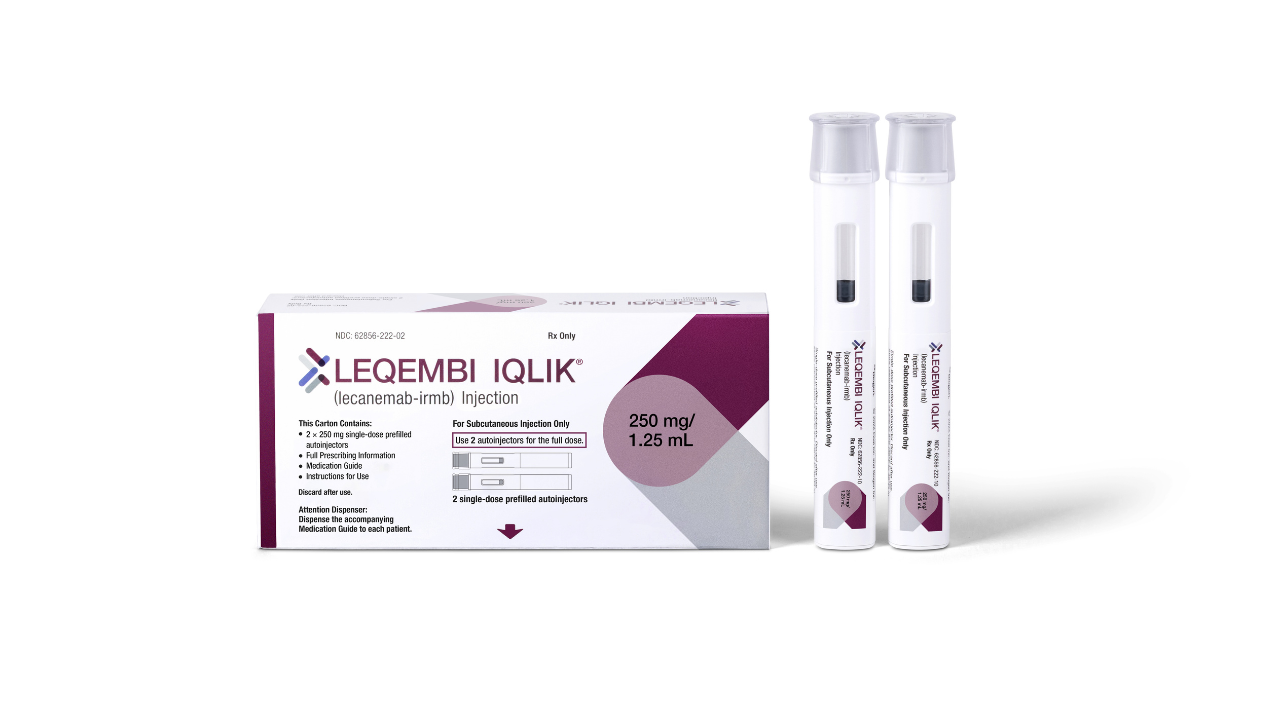
But how about stopping it? In fact, how about reversing it? So that’s what we’re going after. We’re going after Alzheimer’s because, one, it’s fatal. And two, as I say, lecanemab and aducanumab notwithstanding, you can’t cure it. We’d like to cure it. We’d like to reverse it. So we’re going to take it to clinical trials and see.
“So what we’re focused on really is not giving you a few more years and slowing down the onset of your knee pain, but actually reversing it. That is resetting the aging process.”
Being Patient: What does that mean exactly by reversing cellular aging to reverse Alzheimer’s? What exactly is happening and what does that look like in terms of therapy?
Fossel: Well, again, there are a number of approaches we could use. The natural approach, you make an enzyme in your cells, in some of your cells, certainly you do in ova, for example, in sperm, you make telomerase and it resets the aging clock.
So the question is, can we take a perfectly normal gene that normally is locked up and give it to you and reset the aging clock? The answer in 1998 in an article in Science was, yeah, we can do that in human cells in the lab. And in the year 2000 and 2001, there were at least three studies that did this in human tissues in the lab, essentially. And about a dozen years ago, it was accomplished both at a Harvard lab and a lab in Madrid using different techniques. But resetting it in animals?Not very well, but effective results, very impressive, just could be better.
And the second study I mentioned, the one Maria Blasco did in Madrid, who is the director of the CNIO Institute, she used a technique that we’ve already seen used in FDA trials for gene therapy, for example, in Zolgensma. Now, the technology has progressed a lot since then, but that’s the same basic approach. What we’re saying is we’re going to take a perfectly normal human gene that you have, give it back to you, let your telomeres reset and see if we can cure disease.
Being Patient: How is this different from typical gene therapy as we know it?
Fossel: Well, in typical gene therapy, I have, let’s say, a gene that is causing a disease, and it’s usually much more complicated than that. But let’s say there’s one gene causing a disease, and the approach to gene therapy would say, let’s get rid of that gene and put another gene in. That is a simplification, but that would be the idea.
In this case, the question would be, will you keep producing the new gene, the good gene, normal gene? And the answer is maybe. For how long? And what about side effects and risks? We’re not interested in that. We’re just interested in, as it were, rewinding the clock. And after that, we’re fine if the gene goes away. So, in fact, the approach we’ll take will be exactly that. We’d like to rewind the clock and not have it stick around, not have a permanent change.
Being Patient: What is happening biologically on the cellular level of aging? Do we discard old cells? What happens to those? Tell me a little bit about the biology behind this.
Fossel: Almost everybody thinks aging is just entropy. I used to get this at Stanford 50 years ago. Aging just happens. It’s wear and tear. It’s entropy. Things fall downhill, what do you expect? Well, that’s kind of a blasé attitude, and it turns out a lot more complicated than that.
Aging isn’t entropy. It’s entropy that occurs when maintenance fails. And if you keep good maintenance, as, for example, the germ cell line going back for a billion years, it works out pretty well. And what you find is that the older we get and the shorter the telomeres, the more the pattern of gene expression changes and turnaround, repair, recycling slows down.
So examples. Say you’ve got a membrane in your mitochondria. Well, you don’t have a membrane in your mitochondria for 50 years, 80 years. No, it’s continually being recycled and damaged and being turned over. But that rate of recycling slows down as we get older. And the outcome is you get leaky mitochondria, for example. But that’s not the only place. It happens with DNA repair. It happens with beta amyloid. It happens with tau proteins. It happens everywhere you look. You find the recycling rate slows down and the outcome is damage increases.
Say you had an old house and [your family has] had it for 500 years. If it’s still there, it’s because people kept an eye on it, repaired it, took care of it, repainted it, replaced the roof. But what happens in houses that fall apart is people don’t repair it. It’s the same thing here.
Being Patient: Does this mean it would tackle all aspects of aging? You’re talking about it being applied to an aging disease, but does that mean we’re not going to look as old?
Fossel: The quick answer is yes. It’s remarkably more complicated than that. For example, when we use this therapy, we’ll be addressing certain cells, and it’s very hard to address every cell in your body. So we’re going to start with some specific cells in the brain for Alzheimer’s. It should work equally well, for example, for other dementias like Parkinson’s disease, Lewy body disease, frontotemporal dementia, the whole gamut, but that’s different than saying I can at the same time address your coronary arteries or your osteocytes or your chondrocytes in your knee. We may need to use specific addresses for some of those cells, but in principle, yes, we’re looking at reversing aging generically.
Being Patient: When you’re talking about it for Alzheimer’s, you’re not only talking about aiming it at the people who have APOE4, it’s across the board? Or where would you start?
Fossel: It’s not just the gene that’s the problem, it’s the turnover rate. If we can reset the turnover rate, we think you’ll find that it doesn’t matter if we have APOE4 or APOE2, as long as the turnover, the recycling rate, is fast.
Being Patient: Where are you on the timeline of research? Where are you in terms of actually getting approval and trying this therapy?
Fossel: The big rate-limiting step for us is just getting funding because people don’t understand what we’re talking about. Getting that through to investors has been tough. We now have two global commitments for fully funding us through the FDA.
The next step will be a large animal study followed by a Phase 1 trial. I suspect we will end up doing a large animal study in dogs followed by human trials.
“But in principle, yes, we’re looking at reversing aging generically.”
Being Patient: Based on what’s been discussed, using the word cure in Alzheimer’s sounds like the process as described could slow down or stop the ongoing progression. But when we talk about brain cell loss, brain shrinkage in those with Alzheimer’s and loss of memory, a reversal would still not be possible in those whose Alzheimer’s has progressed beyond a certain point. Is that correct?
Fossel: A right question, but again, as with everything else, it’s more complicated than that. So, for example, we know from the work done at Harvard about a dozen years ago that you actually get regrowth of brain cells and brain volume, as well as an improvement of behavior. But you’ve got to expect, as I think that question implies, that there’s a Humpty Dumpty effect. Some things you can’t put back together.
So let me make up some numbers. Let’s say I’ve got Alzheimer’s disease, and let’s say that 90 percent of my cells are fine, nine percent are sick, and one percent are dead. I can’t get the dead back. But the almost dead, the sick cells, maybe those 9 percent that are not doing very well, those I could turn around. So the real question then would be, if I have a patient who really does have Alzheimer’s disease, what percentage of those cells can I get to function again? And what percent are gone altogether? Those I can’t get back. I guess the short way of putting this is, the worse the Alzheimer’s, the harder it is to get people back.
Being Patient: Is there a way to see how our cells are aging to determine before we go into full-blown disease where the vulnerabilities are?
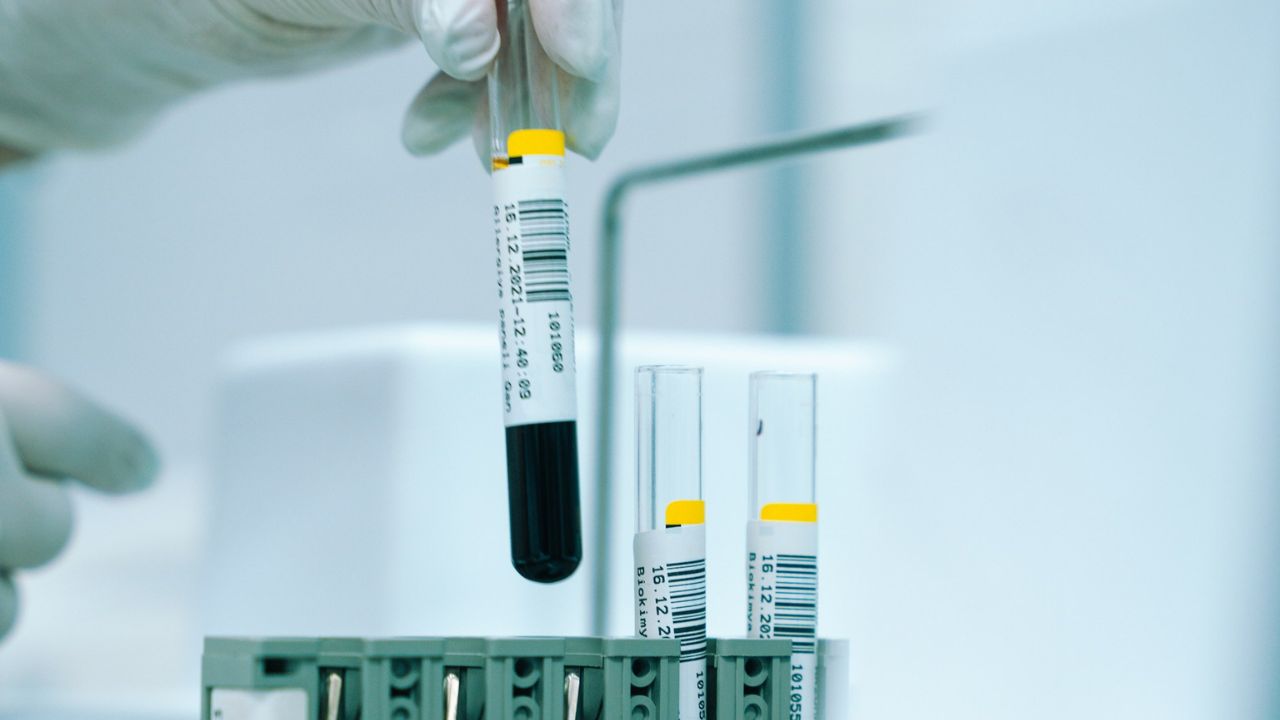
Fossel: Harder than you might think. Almost all of the data that I see in the medical literature is good data, poor interpretation. Almost all the data out there that looks at telomere lengths is looking at cells that are easy to get, and those usually involve a blood draw. So I test your peripheral leukocytes, your white blood cells. But the problem is that peripheral leukocytes don’t tell you what’s going on in the brain or the heart or your knees. You know, to do that would be like saying, “You have gray hair, so I must have osteoarthritis.” Well, yes, I’ve got gray hair. There’s a correlation between the two, but I’m sorry, that’s a poor way to make a diagnosis. And yet that’s exactly what we do in most literature. We look at people’s white blood cells and we try to make inferences about the disease. Wrong place to look.
What we’d like to do, and no one in their right mind wants to do this, is do a brain biopsy and see exactly what the telomeres are in your astrocytes, your microglia, your neurons and your central vascular system in the brain. No, we can’t really do that. So the question is, are there surrogate markers that will tell us a little bit about those telomeres? Not very good ones. I think we’re going to fall back on the usual criteria, which is, can you think, what does the scan show and what do the labs show? And those won’t directly be telomere measurements, except in the dark.
Being Patient: This is a fascinating conversation. Again, a little frustrating because we want to know the answers more quickly, and it sounds like you’re just starting out. But I definitely learned a lot in terms of the biology of aging.
Fossel: Let me give you one final quote, then, if I can.
From 30 years ago at the NIH when I gave a talk about this, 30 years ago next month. And I was talking about reversing aging, and I said, anyone who leaves here now and thinks you can reverse aging is naive. But anyone who leaves here now and thinks you can’t reverse aging is just as naive. If you have any sense, you leave here in an hour saying, show me the data. So let’s see what the data shows.