New Tau PET Imaging Provides Sharper ‘Lens’ To Put Alzheimer’s Tangles in Focus

In the first head-to-head comparison, a newer tau PET tracer shows it may spot Alzheimer’s tangles earlier and provide more accurate disease staging.
Long before the onset of Alzheimer’s symptoms, disturbances in biological processes alter protein signatures throughout the brain, and proteins called beta-amyloid —which normally promote healthy cellular and immune function in the brain — clump up and form into plaques. As the disease progresses, tau proteins that stabilize the intracellular highway to keep neurons healthy and functional start to form tangles and kill off brain cells.
A brain imaging tau PET scan helps visualize these tangles. The imaging involves injecting a safe amount of radioactive drug tracer that binds tangles in the brain and light up on a scan. A new tracer could bring these tangles into focus faster.
A study published in The Lancet imaged the same individual twice with two different radiotracers: Tauvid, previously approved by the Food and Drug Administration (FDA), and Lantheus’ MK6240, which was approved in August 2026 and spotted tangles even earlier. Neil Vasdev, the scientific director of the Brain Health Imaging Center, who wasn’t involved in the study, told Being Patient that the new tracer is like a “sharper camera lens.”
“The picture’s the same,” he said, “but the newer tracer brings the earliest changer changes into focus.”
Tracking tau in the brain
The researchers tested the two tau PET tracers across 682 individuals living in the US and Europe. Each participant also received an amyloid PET scan and cognitive assessments.
The new tracer was more accurate at distinguishing between cognitive impairment caused by Alzheimer’s — where beta-amyloid is also present in the brain — and non-Alzheimer’s-related impairment. It also spotted tau more often in cognitively unimpaired individuals than Tauvid. Since it is more sensitive to tau, the researchers calculated that switching to this new tracer could help identify an extra 23 cases of Alzheimer’s for every 100 people tested.
Dr. Tharick A. Pascoal, a neurologist and associate professor at the University of Pittsburgh, told Being Patient that the new tracer “had higher sensitivity and was able to detect much more tau pathology than we imagined.”
MK6240 also changes clinical staging. “More than a third of the participants were placed at different disease stages, depending on which tracer was used,” said Vasdev, with the newer tracer placing participants further along in the disease process.
Still, more studies are needed to understand MK6240. Vasdev added that the new tracer hasn’t been validated head-to-head against tau in post-mortem brains. And since most were white, it also isn’t clear how well the tracer would perform in Black and Hispanic Americans.
Integrating tau PET into the diagnostic process
Currently, tau PET scans are seldom used for diagnosing Alzheimer’s. Tauvid, despite FDA approval, is only covered on a case-by-case basis by Medicare.
Experts like UCSF neurologist Dr. Gil Rabinovici, believes that better scans could one day foretell progression. “It really is how much and where the tau is that might help us predict for an individual person how fast they’re likely to progress,” he said in a LiveTalk.
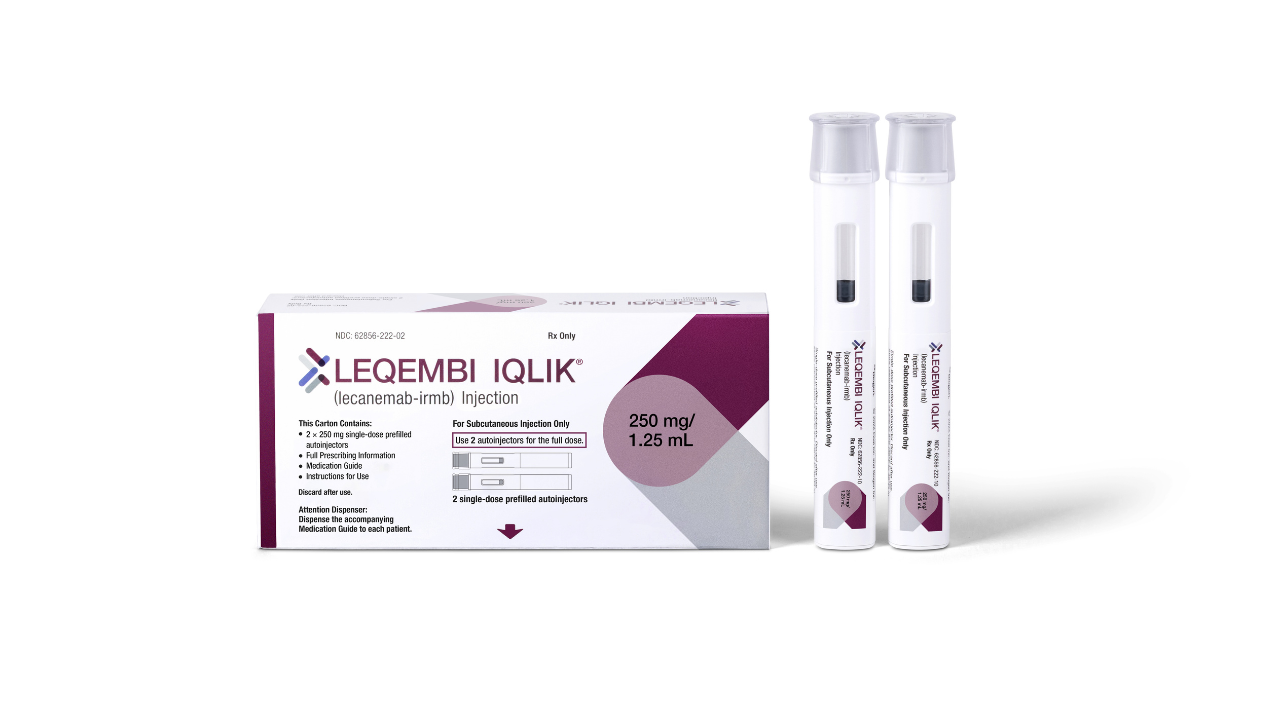
Pascoal argues these scans could also provide more certainty about a diagnosis and help find the individuals who would most benefit from the two FDA-approved anti-amyloid medications Leqembi and Kisunla. In the Kisunla trial, there was some evidence that individuals with more tau in their brain benefited a bit less than those with less tau.
On one end are those who test positive for beta-amyloid plaques but don’t have tau, meaning their cognitive impairment might be caused by something else. “We know that the amyloid pathology is found in about 30 percent of people over 75 years old,” said Pascoal, and that only 10 percent of those individuals might develop Alzheimer’s.
On the other hand, it will also exclude individuals with more tau who have progressed too far to benefit. Pascoal and other researchers are optimistic that this new tracer could improve diagnosis of the disease. With more anti-tau treatments coming down the pipeline, including Biogen’s gene-silencing therapy diranersen and Eisai’s etalanetug, these tools could become invaluable for tracking how well these medications lower the levels of tau tangles.
FAQs
While both imaging tracers detect Alzheimer’s tau tangles, MK6240 is more sensitive to tau. In a head-to-head comparison, it detected these tangles earlier, leading to the diagnosis of an extra 23 cases of Alzheimer’s for every 100 people tested compared to Tauvid.
Tau PET scans are not routinely used to determine eligibility for Leqembi or Kisunla. However, research suggests that these medications might work best in individuals with low levels of tau. Some researchers believe that tau PET scans could help doctors spot people who would benefit most from these treatments.
The FDA approved MK6240, also called Tauflarify, on Aug. 14, 2026.