I’m Still Me: Scott Redfern on Living With Alzheimer’s
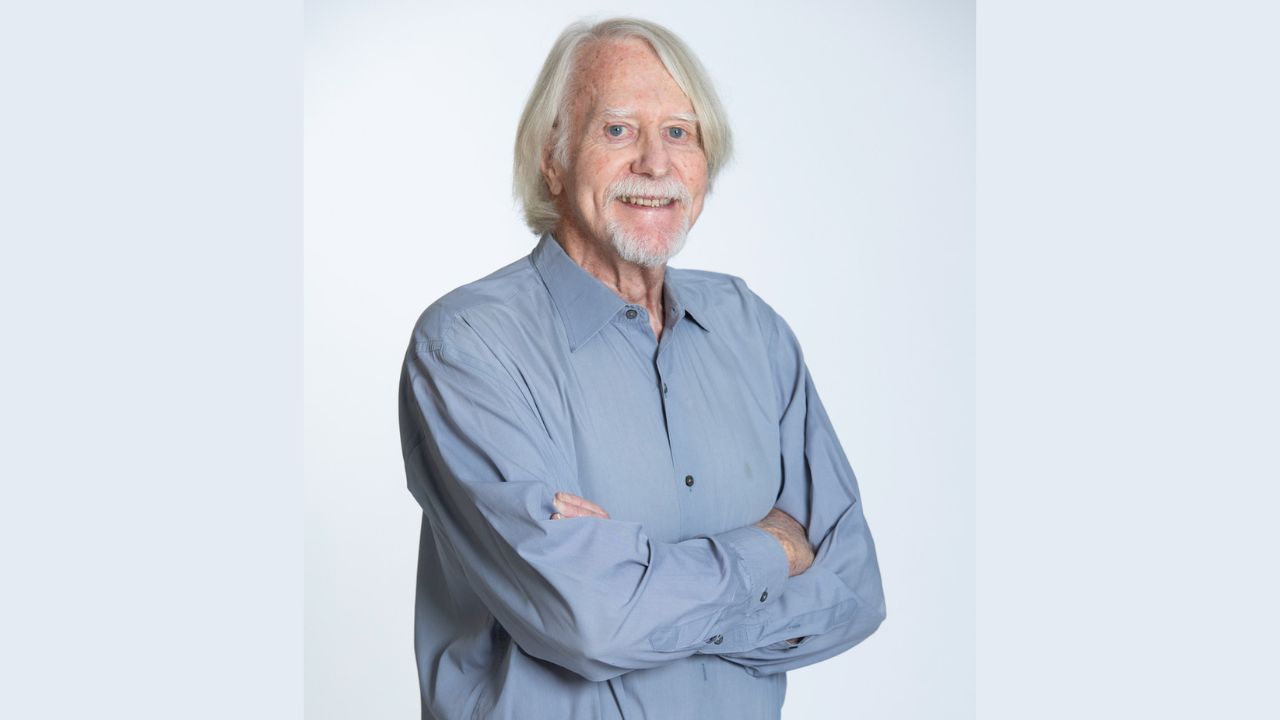
After receiving an early Alzheimer’s diagnosis, Scott Redfern chose to focus on treatment, advocacy, and maintaining his sense of identity.
Journey to Diagnosis is a Being Patient series sponsored by Eisai. As with all of our reporting, the sponsor has no role in choosing guests, shaping questions, or reviewing content before publication.
Scott Redfern first noticed cognitive changes in his mid-50s, when he began struggling to find words during stressful meetings and conversations at work. Because Alzheimer’s disease ran in his family, he sought medical guidance, but early cognitive testing and an MRI did not provide clear answers.
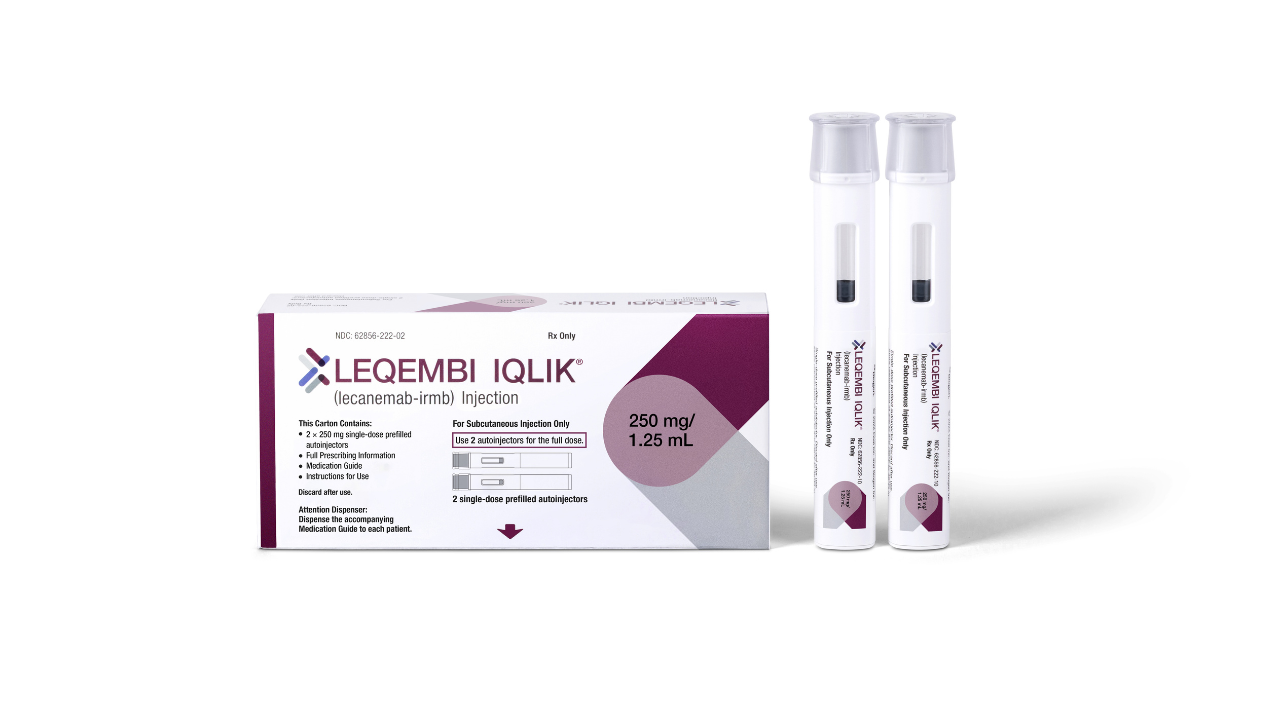
After advocating for further evaluation, an amyloid PET scan confirmed amyloid buildup in his brain. Redfern, now 62, has since retired and is receiving Leqembi, also known as lecanemab, an anti-amyloid treatment approved for people in the early stages of Alzheimer’s.
In this conversation with Being Patient’s Mark Niu, Redfern discusses the emotional impact of his diagnosis, the importance of finding compassionate care, and why patients may need to advocate for themselves when they know something is wrong. He also shares how writing his Substack newsletter “I’m Still Me,” volunteering, hiking, and staying connected with friends have helped him preserve his sense of identity. His message to others experiencing cognitive changes is that seeking answers early can provide access to treatment, support, and more time to plan how they want to live.
Being Patient: Tell us how old you are now and when you first began noticing changes in your memory.
Scott Redfern: Sure. I’m about to turn 62 in a couple of weeks. I would say I started noticing things about six years ago, so I was around 56 at the time. Especially when I was in stressful situations at work, presenting in internal meetings, presenting at customer meetings, I’d notice — the best way I can describe it is a speech disfluency. At times, I could visualize what I wanted to say, but I couldn’t verbalize it. And it would frustrate the living daylights out of me.
Initially, I’d battle. I’d have a battle in my brain, tune out of the conversation, trying to force out that really good word or phrase that was stuck in my head. And over time, I learned a little bit more to stop fighting it and pick a less optimal word or phrase and move on as opposed to struggling with it like I had been. And that’s what drove me to go to the doctor and start learning about what was going on.
Being Patient: So it got bad enough where you thought that there’s something not right, I need to seek medical attention?
Redfern: With Alzheimer’s running in my family, my grandmother had it, and my grandfather, her husband — he wasn’t my biological grandfather — but seeing it with both grandparents on my mother’s side, I was hypersensitive just to the symptoms and what’s going on. Maybe I was hypersensitive to a fault at times of looking for those signs. But as I started seeing things that many people might write off, I wanted to know more and understand if something more to it. Because when I was younger, I had had a number of different concussions and accidents and things like that. And I was worried that there could be something more to it.
Being Patient: Did you ever consider getting genetic testing or even blood tests?
Redfern: I didn’t even know that those types of things were possible back then. Obviously, the blood tests weren’t available back then. I’m not even sure the genotyping was available back then.
But back then, I did go to see a neurologist. Through the MoCA test, the Montreal Cognitive Assessment, I really didn’t even fit into MCI, mild cognitive impairment, but I was kind of on the edge. And so the doctor said, “You’re right on the edge of MCI. Don’t worry about it. Come back if it gets worse.”
So at the time, the MRI that I had back then showed normal, and there wasn’t really anything else to do anyway, because there were no treatments, more disease-modifying types of treatments back then.
I’m part of a clinical study to track patients receiving lecanemab as that disease-modification treatment. So I get a battery of tests every month of 30 minutes to an hour, of many different types of cognitive tests to see how am I progressing? Is the disease progressing? Am I staying stable in terms of where I am? I get both the MoCA tests all the time through my neurologist and then these more comprehensive tests as well.
Being Patient: How long have you been in the lecanemab Leqembi trial? And tell us about that experience, what it’s like.
Redfern: I think I just hit seven months. Today actually was my biweekly infusion. What I would say the good thing is with lecanemab is I wasn’t sure what to expect from lecanemab. I was worried that going in, it might knock me out for a day or so after getting the infusions. I really have no effects at all. I don’t have the more serious side effects like ARIA, the brain swelling and things like that. I don’t have headaches or nausea or any of the other types of allergic reactions. I go in, I get my infusion, I come out, and I go about my life.
Back when I was first diagnosed, the doctor gave me the opportunity to look at both lecanemab, which is Leqembi, or donanemab, which is Kisunla. And I did my own research into the two of them and decided that lecanemab was the one for me because of the prolonged treatment that you can go on to not only clear the plaque out of your brain, but also prevent those toxic oligomers in the future from going bad and continuing to build up the plaque in your brain. So I chose to go with lecanemab because of that.
Being Patient: And tell us what it was like when you first received the diagnosis.
Redfern: It was horrible. Having Alzheimer’s in my family, I knew that sometime in the future, Alzheimer’s may come for me too. I didn’t expect it at 61, last year when I was diagnosed. So it was just a gut punch. And it took me a while afterwards to pull myself out of a really dark place from the initial diagnosis.
But it also took me a while to get to that diagnosis too, because it was probably last year, about, I would say, the April timeframe of last year. I started going back to see the neurologist and they did the MoCA test. They said, “You scored 30 out of 30, it’s fine, don’t worry about anything.” And I was saying, “lLook, I know that there’s something going on in my brain.”
So I continued to push. And they did the newer blood test, the p-tau 217, which came back inconclusive. So there still wasn’t anything, but I kept saying, “There’s something going on. I don’t know what it is. I wasn’t in there saying I’ve got Alzheimer’s, but something’s not right.” And that was when they said, “All right, we’re going to order the amyloid PET scan.” And the amyloid PET scan is what came back and confirmed, yes, I have amyloid deposits in my brain.
And then we had to go through the rest of the test then to decide, what are the dangers of going forward with a lecanemab or a donanemab — how susceptible might I be to ARIA? I went through the genotyping. Thankfully, I had no copies of the ApoE4. And then I had the MRI. And the MRI shows that I have normal brain mass for a 62-year-old, or back then a 61-year-old, male. But obviously, the signs are there with the amyloid plaque. So we were able to then begin the lecanemab infusions.
Being Patient: It seems like you went through a lot of steps. Do you feel you got good guidance from doctors as to what next step to take? Or was it left to your own research to try and figure things out?
Redfern: What I realized early on is if myself and my wife, if we weren’t our own advocates, we weren’t going to get answers. So we were pretty far down the path with this one neurological group, but their lack of compassion, even their dismissive responses to me as I was doing my own investigations and asking questions — it was clear to us that at some point I had to find care teams that were more compassionate, more focused on me.
We ended up sticking with them for a while while I was looking, but I ended up with both a local specialist from Yale and also a specialist that specializes in younger-onset Alzheimer’s, which is what I have at Mass General and Brigham. So I now have two care teams that I’m working with. They’re compassionate, wonderful people and teams, and I feel much better about that. But early on, it was our own advocacy and insistence that led us through. Otherwise, I might still today be wondering whether it’s something more serious or not.
“What I realized early on is if myself and my wife, if we weren’t our own advocates, we weren’t going to get answers.”
Being Patient: You decided to retire and prioritize your health. How did that transition affect your sense of identity?
Redfern: I left work to seek out the diagnosis. I changed careers a while back and was working in the nonprofit space, working on environmental conservation and climate change. And I just wasn’t taking the time that I needed to get an answer on what was going on. So I left work.
After the diagnosis, my wife and I talked, and I said, I can go back to work. But we agreed that, number one, the top priority was my treatments. I didn’t know how these treatments were going to go, what the intensity was going to be, and also focus on making memories. I don’t know where the progression is going to go, how fast it’s going to progress. All I know is that I want to enjoy whatever amount of time that I have available to me. Hopefully, it’s plenty of time. But I want to enjoy it. And so, we made the decision that I was going to retire and focus on those different things.
It has been a challenge from an identity perspective because, for so many of us, our work is our identity. And I left one profession a number of years ago and changed it. And that was hard for me to lose that tech guru identity from when I was doing product development in the computer industry, to move to nonprofit. And then I shifted yet again.
The way I address some of that identity part is I’m still very active in volunteering with a number of nonprofit organizations in the environmental conservation and climate change area, as well as things that I’ve done for many years now, like mentoring youth who have been impacted by domestic and sexual violence. I retain my identity by continuing that consistency. I think the people who have the biggest challenge are the ones who all of their identity goes off a cliff without some consistency. And my consistency is my volunteering and that type of activity going on.
“I retain my identity by continuing that consistency.”
Being Patient: How long have you been receiving lecanemab?
Redfern: About seven months. I started mid-November.
Being Patient: Have you been able to see any changes in the tests? Have they shown anything so far?
Redfern: I’ll know that a little bit better later this month. After six months of those intensive tests that I get every month, the first six months have been packaged up and sent to my neurologist, and we’ll go over them at the end of July when I have that meeting. So I’ll see if there’s any changes.
I don’t feel like there’s any change. It’s tough when you have Alzheimer’s. You tend to look at anything bad and try to draw a bad conclusion from it. If I forget to do something, it’s, “Oh my God, is this the disease getting worse?” A month ago, I took out the garbage one day instead of the recycling, and it was, “Oh, what does this mean?”
So I tend to read things in, and I think a lot of people do, and we torture ourselves trying to read more in, but I haven’t noticed any benefits, nor have I noticed any disease progression at this point.
Being Patient: You write about your experience with Alzheimer’s on a Substack with a newsletter called “I’m Still Me.” What does that phrase mean to you?
Redfern: I had created a Substack before this diagnosis had occurred. So I have a Substack and then I have a number of newsletters under it — for one is on climate change, one’s on just my outdoor expeditions, sharing some of that. And another was on social justice. But when this happened, I very quickly said to my wife, “I’m not going to be one of those people who tries to hide this, because it can be so stressful on the person when you try not to admit what you have. I’m going to go the way and take a full-frontal assault on this disease. I’m going to create a Substack. I’m going to announce it to the world. And I’m going to share for as long as I can my journey with the world to help them. When I learn something, other people will learn it.”
Being Patient: Did you think of that from the very beginning? Or was there a period where you thought, “Oh, I want to keep this personal, I’m afraid.”
Redfern: Surprisingly, it was the first day. It was like, I am not going to be one of those people who tries to hide this. I’m just going to go all in. And the name “I’m Still Me” came from those really dark first couple of days. I had to get my head around it by saying, “You know what? Today, I’m still the same Scott that I was five or six days ago when I was blissfully ignorant to the fact that I have Alzheimer’s disease. And going forward, it’s going to be the same thing. And there may be a time in the future when my memories start to fade and things like that. The memories that I’ve created with other people and the ways that I’ve helped other people are going to be what maintains that old Scott.”
Being Patient: What changes, routines, or activities have helped you the most since your diagnosis?
Redfern: I would say in the first few months going into it, I did a lot of reading. I embraced fully the four pillars of prevention that you read about from the Alzheimer’s Association. So, focusing on good physical activity and getting enough sleep, good, healthy eating habits, and also just social activity.
I think the area that I was worse in is losing contact with older friends of mine. So I made a concerted effort to start going back out, reaching out to friends, and doing more socializing. But all four of those are something that I’m now focused every day on, making sure that I’m eating right, I’m exercising all the time. I’m staying connected with friends.
Being Patient: Do you have children? How did they react to your diagnosis?
Redfern: So I do have two children. My two children are grown. They’re 34 and 31. When I first got the diagnosis, my wife and I agreed that we were absolutely going share everything, but I wanted to get through the genotyping and the MRIs and the other things to know: am I eligible for the lecanemab infusions and get everything so that when I shared such an earth-shattering diagnosis with them that there was good to share with them as well.
It was probably about three months that it took me to get through all of that. I actually had my first lecanemab infusion, and then we had a family get-together. My son lives in another part of the country, so we did it virtually. And I shared the information: yes, it stinks that I have this, but also there’s a lot of good. I didn’t have theApoE4. My brain — the MRI shows normal brain mass, all the good things. I’ve got the opportunity to take this lecanemab to slow the progression. So it wasn’t such bad news right up front.
From that time, after that, I shared it with my family, my parents, and some of my other close relatives and friends. I continued to share it with more and more friends. And I have to say, I was worried at times what some of my friends or other people might think. And for people out there who are worried about getting diagnosed or worried about sharing their diagnosis with people, I would say have faith in your support network. They’re going to be far more supportive than you might think.
Being Patient: And tell me more about that — the importance of having the right support network for you, because going alone, it’s a long road.
Redfern: I couldn’t imagine doing it alone. My wife, Jane, is my rock. But it’s all of your friends, all of your coworkers that you share it with. What really made me feel good as I shared is people would say, “Tell me more.” They’d ask me questions. I want to be able to share, talk more. And for them to ask me questions showed that they actually cared and wanted to understand the disease more, as well as how it affects me.
And I didn’t want it to be something that everyone just said, “Oh, I’m sorry.” I’ve got it. I want to share it. But let’s still have fun. Let’s still joke. One of my friends I shared with them while we were out backpacking, and they said, “I don’t care. We’re still going to drag your butt out hiking whenever we can. So, this doesn’t change anything from our perspective.” And those are the types of things that your friends and your real support network are going to do for you. They’re not going to let this drag you down.
Being Patient: And speaking of backpacking and hiking, I think I saw on your LinkedIn that you’ve climbed the 67 tallest mountains in New England, 23 of the state high points, completed the 2,195-mile Appalachian Trail. I think I could go on for this — and many, many achievements. How is it affecting your hiking? Are you still able to get out and do as much?
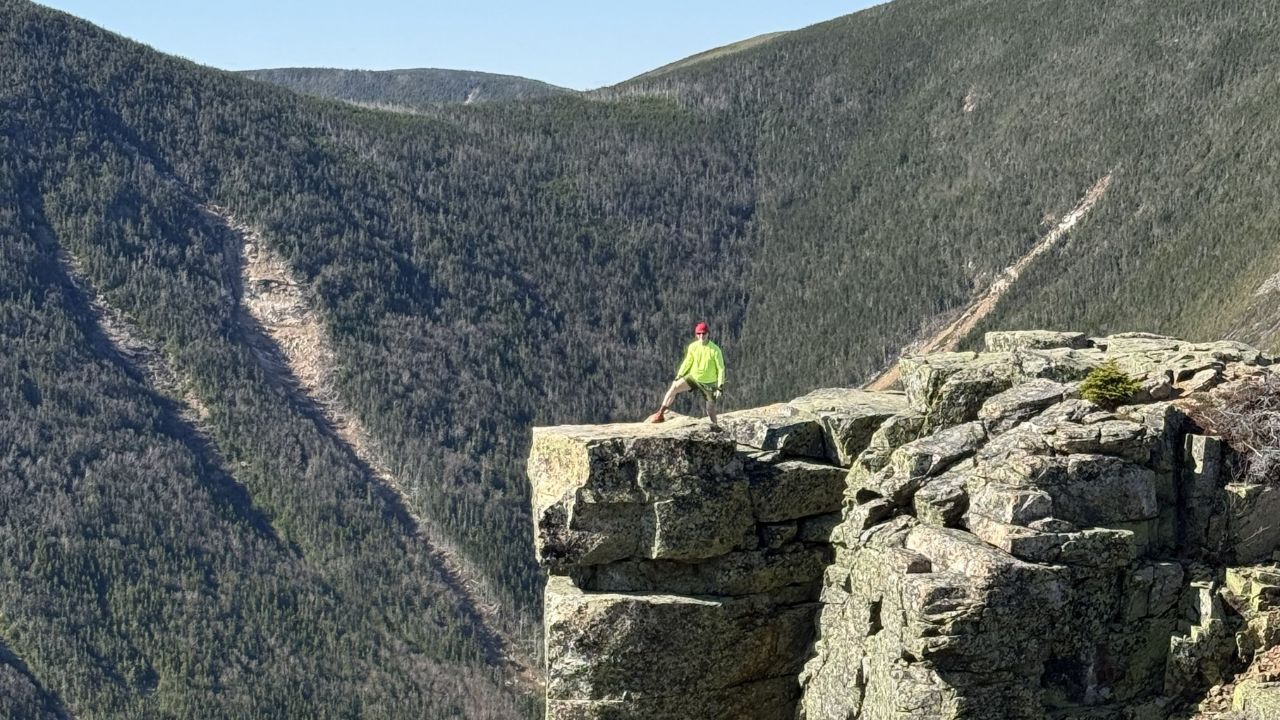
Redfern: Yes, I just finished a 100-mile backpacking trip in Maine a couple of days ago. I came home. I met a friend of mine up there who was looking, who was working on finishing the AT, and I finished and I hiked with him for 100 miles up there. I needed to get back for my infusion. Otherwise, I would have gone all the way to the end with him.
I consider myself really fortunate because if I couldn’t hike, that would be really sad for me. But I navigate as well as I ever have. I don’t have any fears in going out into the woods and navigating by compass and map. I’ve carried for the last 20 years a satellite transponder. So I still have that in case something goes wrong. But I don’t have any indications that those skills are leaving me yet. And the woods, the backcountry is my happy place. So being able to continue to do that, I feel is good, good for me emotionally, good for me physically. There’s nothing bad that I can take away from still being able to do that.
Being Patient: You’re still incredibly physically active and also mentally active too, with your Substack and continuing to write. Tell me about the experience of writing about your diagnosis. It obviously helps stimulate your brain too, but also does it help you find certain connections and even meet other connections through your writing too?
Redfern: First of all, writing is very cathartic for me because especially when I shared the early days after my diagnosis, I left what I wrote raw. I’d certainly edit it, but I wanted the feelings in there to be raw so that people could understand what a person just diagnosed with this really goes through. There’s some crazy things you think about. When I was first diagnosed, we have two new cats that we had just adopted. And I was thinking, oh my God, the cats are going to outlive me. The silly things that go through your mind.
It’s cathartic for me to write, but I’ve also met quite a few people that I’d never known before that we now correspond regularly, who are either caregivers or are Alzheimer’s patients themselves. And it just helps me connect to my friends, too, to help them understand, even if they’re not with me every day, to understand some of the things I’m going through.
Being Patient: For someone who is noticing early cognitive changes but is unsure whether to seek help, what would you want them to know?
Redfern: What I want them to know is, if you’re unsure about going to get a diagnosis, just remember that not getting a diagnosis doesn’t mean you don’t have the disease. And a number of years ago, that might be good to be blissfully ignorant because there was nothing that you could do about it.
But today, there’s treatments that actually slow the progress. So going there, getting diagnosed, is essential because the earlier it’s diagnosed, the better these drugs like lecanemab and donanemab are at slowing the progression. So that’s important. Also knowing early just gives you the best chances of staying cognitively independent for as long as possible.
And like I mentioned earlier, don’t be afraid. And have faith in your support network. They are far stronger than you might give them credit for. Even if it’s coworkers, I’ve noticed that coworkers were incredibly supportive about this. So share with your friends. It’s so much better than just suffering in silence.