Unraveling the Links Between Soccer and Brain Injury
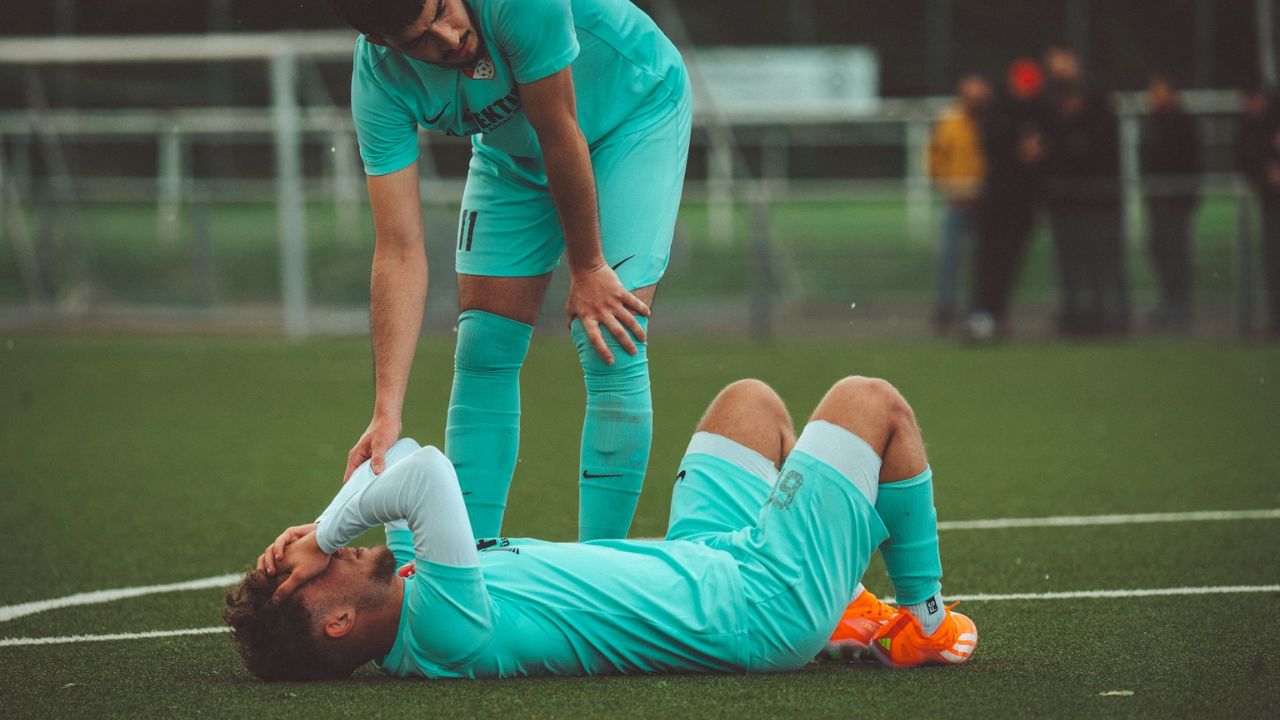
Recent research links headers to acute brain injury biomarkers and starts to track how soccer play leads to long-term brain changes.
As the FIFA World Cup captures the world’s attention, a combination of studies suggest that for your brain’s sake, it might be better to bend it like Beckham instead of heading the ball.
Repeated hits to the head, even ones that don’t cause obvious pain or concussion, increase the risk of chronic traumatic encephalopathy (CTE), a disease linked to memory loss and cognitive decline, and other neurodegenerative diseases like Alzheimer’s or Parkinson’s.
In a recent study, Dutch researchers found that soccer heading leads to an acute spike in blood biomarkers of brain damage, Meanwhile research presented today at the Alzheimer’s Association International Conference (AAIC) in London found that former soccer players showed more brain shrinkage and self-reported cognitive problems.
“This is sadly not a surprising finding, and is consistent with a body of research suggesting that playing the beautiful game may have long term negative consequences for brain health,” Dr. Robert Stern, professor at Boston University and co-founder and director of clinical research at its Chronic Traumatic Encephalopathy Center, who was not involved in these studies, told Being Patient.
The immediate impact of soccer heading
Using video footage and blood draws, a recent study in JAMA Neurology also documented the short-term impacts of soccer heading in amateur players.
The researchers collected blood from more than 300 amateur soccer players immediately after the match, as well as one to two days after. They measured the levels of six biomarkers of brain damage and neurodegenerative risk, and found that immediately after the match, the number and severity of headers were linked to elevations in S100B and pTau-217. These values went back down to normal during the next blood draw, one to two days later.
S100B is a protein biomarker of brain injury while pTau-217 is a biomarker that helps confirm an Alzheimer’s diagnosis in people with cognitive problems, though what it means in otherwise healthy younger adults is unclear.
“It is important to realize that normalization of biomarker concentration does not indicate recovery of neural tissue,” study author Marloes I. Hoppen, a PhD candidate at Amsterdam University Medical Center in the Netherlands, told Being Patient.
He added it isn’t yet clear how this acute damage might translate to neurodegenerative risk down the line.
While researchers have long been worried about the brain health of professional soccer players, the study expands these concerns to amateurs too. “Consequently, we were somewhat alarmed by the clear increases in these biomarkers and the associated dose-response relationships and its possible implications,” Hoppen added. In other words, more headers and harder headers lead to even higher increases of pTau-217 and S100B.
Stern called the study especially important since it used video confirmation of heading rather than self-reporting, providing a more direct measure of the impact of soccer headers. “It would not be surprising that the repetitive alterations in brain integrity lead to something down the road,” he said, adding that former players are more likely to die of neurodegenerative disease.
Why are soccer players at a higher risk of neurodegenerative disease?
There are many studies that look at the brains of former soccer players after death, but little research tracks the potential changes in the brain along the way. Researchers at Imperial College London presented preliminary data at AAIC comparing the brains of 142 former professional soccer players to 56 controls with no history of repetitive head impacts.
The former players self-reported higher levels of symptoms linked to depression and anxiety, and some subjective problems with thinking and decision-making which they self-reported on questionnaires. But they did not score worse on neurocognitive tests than the controls.
“It could be consistent with what we see in Alzheimer’s disease of a subjective cognitive impairment prior to objective neuropsychological test findings,” said Stern.
On a brain scan, the former players had slightly less gray matter, the parts of the brain important for processing information, across regions important for memory and emotional regulation. “We don’t really know exactly why we’re having that finding,” said Caleigh Grace Lynch, lead author of the study. “I think those results are quite interesting, since we don’t see any cognitive differences” on the objective neurocognitive tests.
Still, the authors cautioned against overinterpretation of the findings. “When the scans were looked at individually by a consultant radiologist, the vast majority have been reported as having normal appearances,” said neurologist Dr. Thomas Parker, the senior author of the study. It isn’t clear yet that their history of playing soccer is the reason for these small but significant differences in brain volume.
The next step is following the soccer players and running the same tests two and four years later. The researchers are also collecting blood biomarker data and more advanced forms of brain imaging that could lead to more answers.
Changing the rules of the game
Rule changes that reduce the number of headers and specifically high-impact headers could reduce the risk of this acute damage and potential longer-term consequences.
Though it is ubiquitous in the game today, soccer heading only became popular a few decades ago when soccer transitioned from a heavy leather ball to a bouncy, synthetic ball. Across the US and UK, several youth leagues have limited or banned heading. “One can remove heading from the game, and at least in my view, it would still be the beautiful game,” Stern said.
FAQs
Yes. Heading leads to a temporary increase in pTau-217 and S100B in the blood, indicative of brain damage. A history of playing soccer or heading the ball is also linked to an increased risk of developing neurodegenerative disease.
In the long-term, heading in soccer may increase the risk of developing neurodegenerative disease and chronic traumatic encephalopathy (CTE).
Some youth leagues in the UK and US are phasing out soccer heading through bans and other limits to protect the brain health of players.